On Courage and Kimchi Ramen

Many of us have read through the NYTimes article entitled “No. 37: Big Wedding or Small” with varying degrees of amusement, excitement, annoyance, and thoughtfulness. As a classic (and perhaps insufferable) ENFJ (one of sixteen personalities delineated by the Myers-Briggs personality test), I went on a spree of asking close friends and relatives some of the questions in the article, favoring one particular question:

If you could wake up tomorrow having gained any one quality or ability, what would it be?

My answer is always the same: I would like to wake up with more courage.

I’ve never felt like a brave person. After binge-watching Law & Order: Special Victims Unit, American Horror Story, or even something like Damages, I sometimes make Nico check behind the shower curtain of the bathroom before I tinkle. Much like my insanely skiddish dog, I jump and yelp when surprised, which is all the time. Though I do have a strange streak of breaking up fights between strangers on the B44 or the subway, I generally feel like a namby-pamby. Also, I don’t think my perceived cowardice is unrelated to my obsession with over-preparedness. Apparently, I didn’t start walking until I was over two years of age. I would slowly get up, and just as slowly sit down, without taking one darn step. Basically, I didn’t start walking until I could run. Typical Yejin. I always want to know that I have the potential to do something decently before I actually do it for fear of being mediocre or crap –  to me, this is a lower form of cowardice.

In any case, it’s occurred to me that no quality or trait is a package deal. To be sure, I am unlikely to survive a zombie apocalypse; I would never make it into the Gryffindor House; I may sooner want to die than to fight, depending on the nemesis; I would categorically hate running my own tech startup company with a billionaire antagonist trying to destroy me (boy, I need to stop watching TV and movies). But here are things I do for which I should give myself some credit:

  1. I have no reservations about holding colleagues, family members, or friends accountable;
  2. As much as I make a fuss about over-preparing for success, I handle ‘failure’ pretty well, and make sure to try again, and to try smarter;
  3. I strongly believe that people deserve better, and work hard to be an integral part of making that happen (whether in work, love, or life).
  4. Even though I torment myself an unhealthy amount over making a new dish/meal, I make a new dish/meal, anyway.

Yea, yea, this is a pretty mild list. But it’s a start in taking the road less traveled (where the beaten path = practices of self deprecation). I start my new job tomorrow as Director of Development, where I’ll be a supervisor for the first time, so I need to believe that I have a little bit of courage!

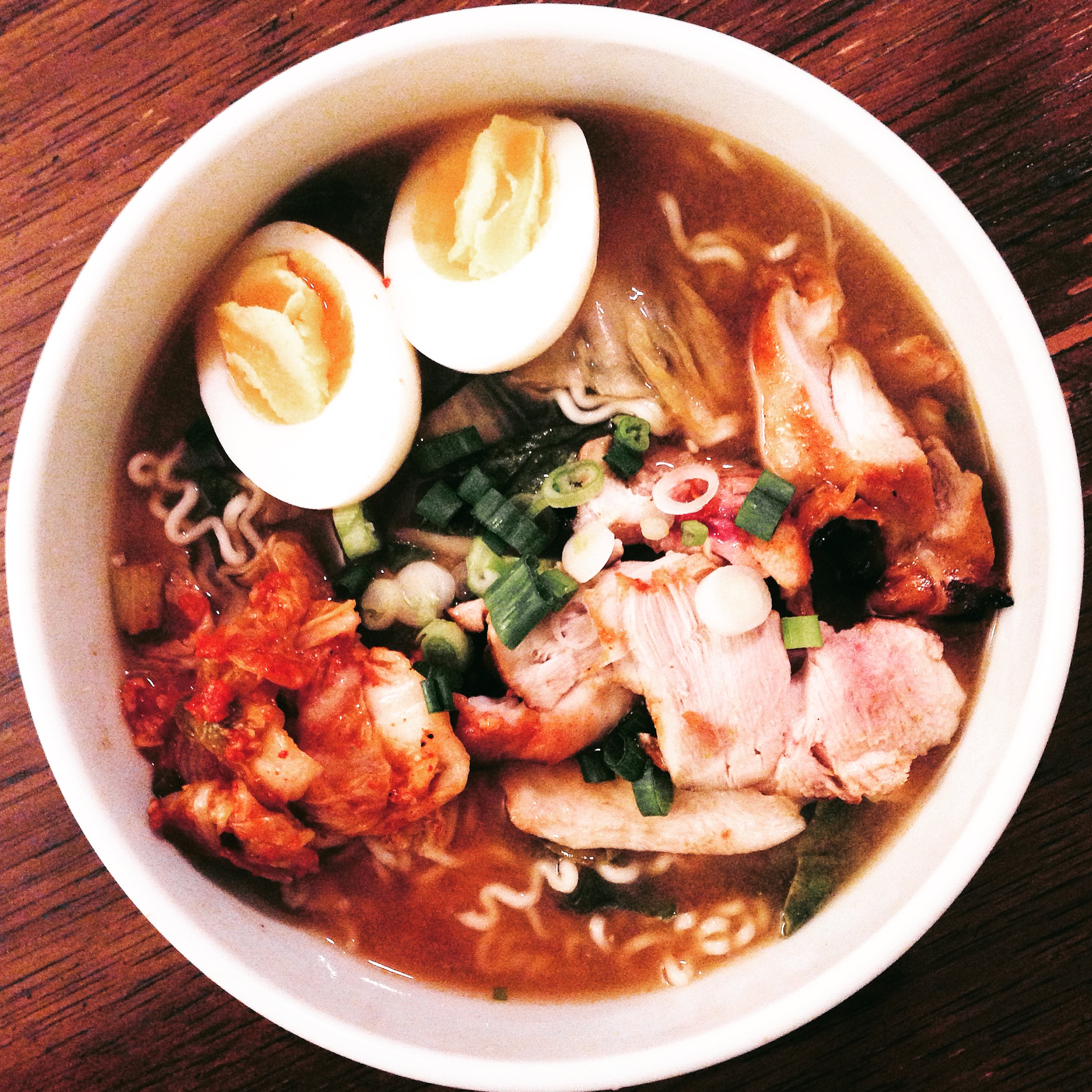
At the very least, my attempt (however arduous and painful) to make new meals has resulted in something quite delicious! Here is the recipe for my very first homemade miso ramen w/ kimchi and other fixins:
Processed with VSCOcam with hb1 preset

Miso and Kimchi Ramen Recipe
Cooking Time: 30 minutes
Prep Time: 45 minutes
4 Servings

Ingredients

Ramen
6 cups of chicken stock (homemade is best!)
1 cup of kimchi, coarsely chopped
2 tablespoons of red miso paste
2 teaspoons of soy sauce
1 scallion, sliced diagonally
1/2 tsp hot pepper flakes
2 bunches of baby spinach, rinsed thoroughly
12 oz of authentic Chinese noodles (these are good)
Salt, as needed

Toppings
4 soft boiled eggs, peeled, and cut in half
1/2 cup of kimchi
1 scallion, sliced diagonally
4 marinated and broiled chicken thighs, coarsely chopped (recipe below)

Instructions

  1. Bring your chicken stock to a gentle boil.
  2. Prepare your toppings. Take your soft boiled eggs and cut them in half; slice the second scallion diagonally; put 1/2 a cup of kimchi in a bowl; and cut up your recently broiled chicken thighs.
  3. Once the stock is up to a rolling boil, add the miso paste and mix thoroughly, making sure to break up the chunks. Once incorporated, add the coarsely chopped kimchi, soy sauce, scallions, and red pepper flakes.
  4. After boiling gently for 10 minutes, add baby spinach. Taste the broth and add salt, as needed.
  5. As you wait for the flavors to incorporate into the ramen broth, bring a separate pot to a boil. Make your noodles per package instructions and rinse with cold water to stop the cooking process. Set aside.
  6. Once everything is ready, put the noodles into the pot with with boiling broth and cook for an additional minute. Carefully place noodles into a bowl, then the broth. Add toppings, and enjoy!

Marinated and Broiled Chicken Thighs Recipe

Ingredients

4 chicken thighs
3 tablespoons of gochujang (Korean hot pepper paste)
3 tablespoons of soy sauce
1 tablespoon of honey
1 teaspoon of white vinegar
1/2 teaspoon of peanut oil
1/2 teaspoon of sesame oil

Instructions

  1. Mix all marinade ingredients in a bowl, and pour into a freezer bag.
  2. Pat the chicken thighs dry, and place them into bag with marinade, making sure every part is covered.
  3. Let the chicken marinade in the fridge for at least an hour.
  4. Take chicken out of the fridge and let it come to room temperature.
  5. Turn on the broiler. Take the chicken out of the bag and place onto a lined baking tray with the skin side down. Place tray into broiler for 10 minutes. Carefully take the tray out, flip over the chicken, add some additional marinade. Put the tray back into the broiler for another 10-15 minutes. Keep watch to make sure nothing is burning – every broiler is different.
On Trying Something New: Self-Doubt as Motivation, Plus a Recipe for Blueberry Pie

I’m an odd combination of traits. I don’t mean this in some self-aggrandizing, quirkier-than-thou, braggart kind of way. For the most part, I’m really quite bland. But there are strange impulses that share a moment in time in my mind and body, that really ought not be paired together. For example, I absolutely adore attempting to cook/bake new things. There is nothing better in this world than trying something different, and having the courage to expand, even if the results are not ideal. But, at the same time, I experience an inordinate level of anxiety whenever trying something new.

Here’s my “how to reduce/create anxiety when trying a new dish” rule book:

  1. Look through some food-porn blogs, and find which picture makes you drool the most. Pick that dish as the new thing you’d like to conquer and eat.
  2. Incessantly peruse 10-30 different recipes of the same dish, just so you know you have the best one.
  3. Pick one or two or three of the best, but keep going back to aforementioned 10-30 recipes, just in case you missed something.
  4. Buy all the ingredients from the winning recipe, but if there are any differences between that one and the second or third best, make sure you buy those groceries, as well. Just in case.
  5. For the few days leading up to your new cooking adventure, study the ingredients, measurements, techniques, and method. Do that at least 10 times before you even think about beginning the process of cooking something different.
  6. The night before your new cooking adventure, visualize your pending experience. Imagine how much time you’ll need in order to perform at your best, and arrange your next day accordingly.
  7. A half hour before your planned cooking time, do one last comprehensive review of the recipe and method. Perhaps find a couple of videos that make a similar dish, and absorb all the knowledge you can handle.
  8. COOK, while obsessively revisiting the recipe.
  9. Prepare to eat, and cross your fingers (and hope to die if the food tastes like shit).

This is pretty much an unfiltered list of how I handle the creation of a new dish.

Why do I behave this way? Why am I a chronic over-preparer? What is the worst thing that could happen? The answer, my friends, is all in my penchant for self-doubt and my fear of disappointing others and myself. I’m not entirely sure from where this mode-of-being comes, but I know it to be a very integral part of Yejin. But I find that my self-doubt, when not all-consuming, is actually very motivating and productive. I don’t cower when self-deprecating thoughts come my way. In fact, I try harder, work more comprehensively, and enjoy shouting “in  your face!” (to myself, like a crazy person…) after a successful adventure. However, I should note that this is probably pretty unhealthy. I do wish I could just enjoy an activity without being consumed by the prospect of joy or disappointment. I’m working on it. In the meantime, I’ll deal with my anxiety by being overly prepared, and hopefully, by enjoying the delicious fruits of my labor.

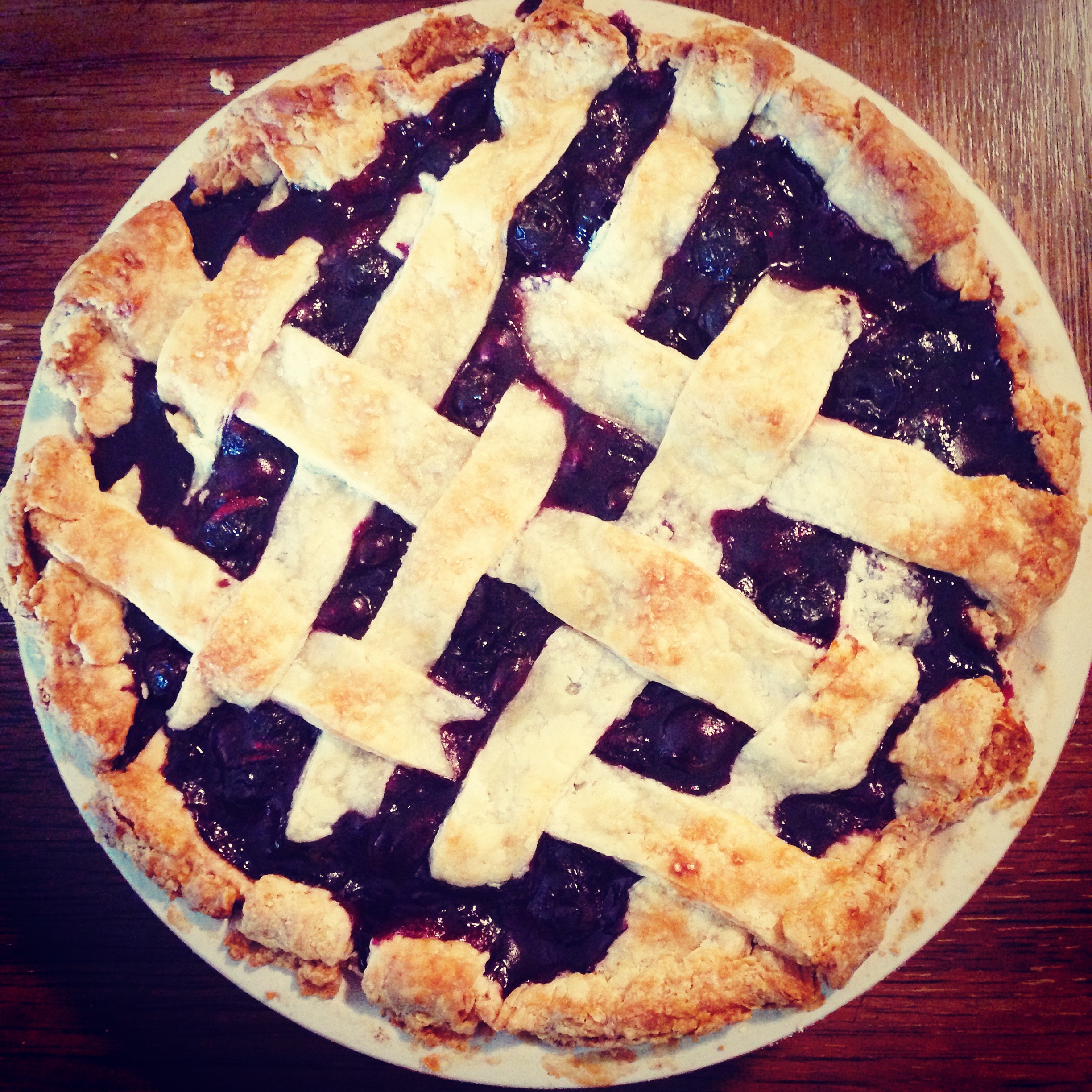
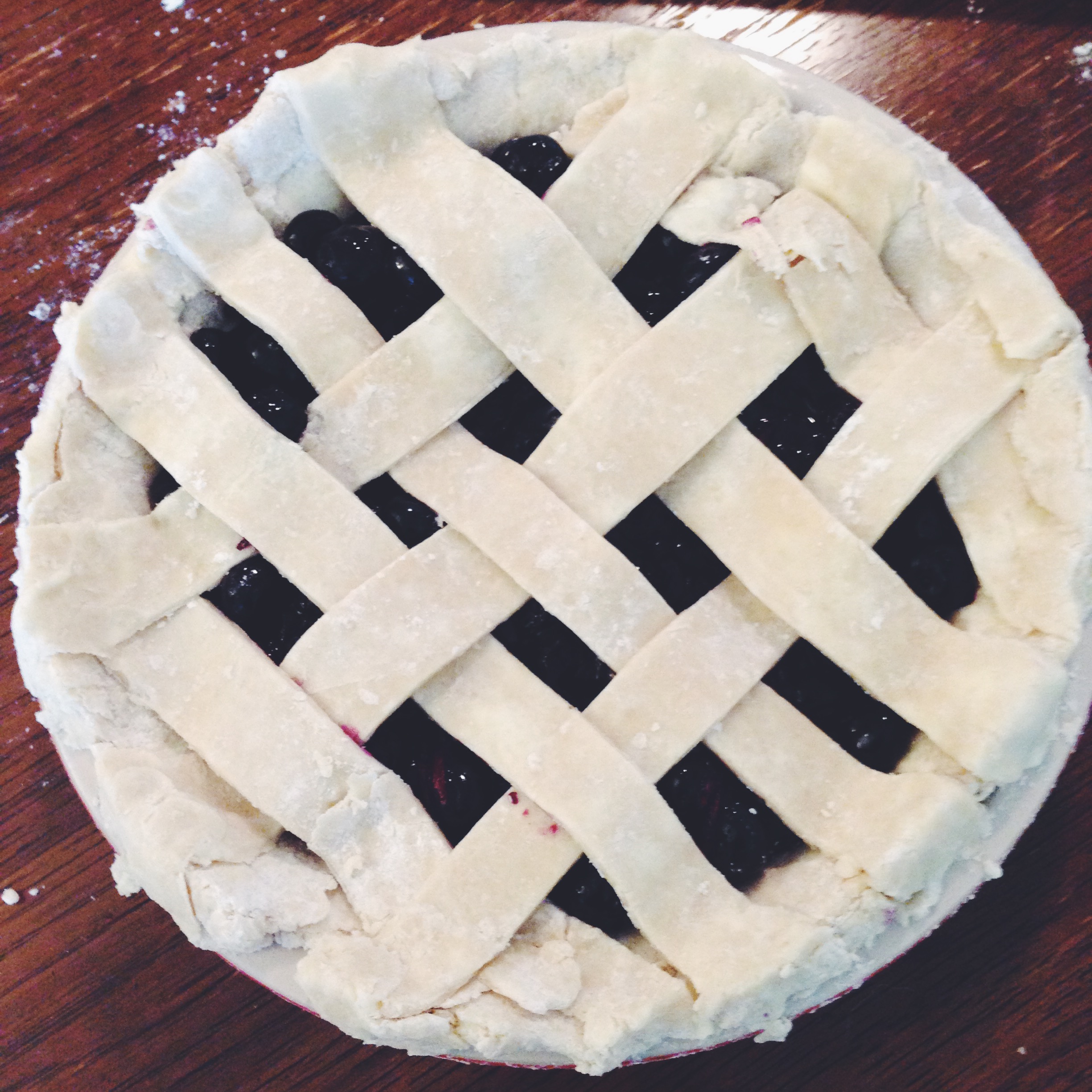
I’ve never made pie before, which explains the completely imperfect lattice top. But there is something so satisfying about making and rolling your own dough. Also, I really enjoy the process of heating blueberries, because eventually, it turns into this beautiful dark color, and bubbles like a thick cauldron concoction. In any case here’s the recipe I decided to use (and study, and restudy):

Processed with VSCOcam with kk2 preset

The inaugural pie

Blueberry Pie
Recipe taken from America’s Test Kitchen 

INGREDIENTS

Foodproof Pie Dough

  • 2 1/2 cups unbleached all-purpose flour, plus more for work surface
  • 1 teaspoon table salt
  • 2 tablespoons sugar
  • 12 tablespoons cold unsalted butter (1 1/2 sticks), cut into 1/4-inch slices
  • 1/2 cup vegetable shortening, cold, cut into 4 pieces
  • 1/4 cup vodka, cold (see note)
  • 1/4 cup cold water

Blueberry Filling

  • 6 cups fresh blueberries (about 30 ounces) (see note)
  • 1 Granny Smith apple, peeled and grated on large holes of box grater
  • 2 teaspoons grated zest and 2 teaspoons juice from 1 lemon
  • 3/4 cup sugar (5 1/4 ounces)
  • 2 tablespoons quick-cooking tapioca, ground (see note)
  • pinch table salt
  • 2 tablespoons unsalted butter, cut into 1/4-inch pieces
  • 1 large egg, lightly beaten with 1 teaspoon water

INSTRUCTIONS

  1. 1. For The Pie Dough: Process 1 1/2 cups flour, salt, and sugar in food processor until combined, about two 1-second pulses. Add butter and shortening and process until homogenous dough just starts to collect in uneven clumps, about 15 seconds; dough will resemble cottage cheese curds and there should be no uncoated flour. Scrape bowl with rubber spatula and redistribute dough evenly around processor blade. Add remaining cup flour and pulse until mixture is evenly distributed around bowl and mass of dough has been broken up, 4 to 6 quick pulses. Empty mixture into medium bowl.

    2. Sprinkle vodka and water over mixture. With rubber spatula, use folding motion to mix, pressing down on dough until dough is slightly tacky and sticks together. Divide dough into 2 even balls and flatten each into 4-inch disk. Wrap each in plastic wrap and refrigerate at least 45 minutes or up to 2 days.

    3. Remove 1 disk of dough from refrigerator and roll out on generously floured (up to 1/4 cup) work surface to 12-inch circle, about 1/8 inch thick. Roll dough loosely around rolling pin and unroll into pie plate, leaving at least 1-inch overhang on each side. Working around circumference, ease dough into plate by gently lifting edge of dough with one hand while pressing into plate bottom with other hand. Leave dough that overhangs plate in place; refrigerate while preparing filling until dough is firm, about 30 minutes.

    4. For The Filling: Adjust oven rack to lowest position, place rimmed baking sheet on oven rack, and heat oven to 400 degrees. Place 3 cups berries in medium saucepan and set over medium heat. Using potato masher, mash berries several times to release juices. Continue to cook, stirring frequently and mashing occasionally, until about half of berries have broken down and mixture is thickened and reduced to 1 1/2 cups, about 8 minutes. Let cool slightly.

    5. Place grated apple in clean kitchen towel and wring dry. Transfer apple to large bowl. Add cooked berries, remaining 3 cups uncooked berries, lemon zest, juice, sugar, tapioca, and salt; toss to combine. Transfer mixture to dough-lined pie plate and scatter butter pieces over filling.

    6. Roll out second disk of dough on generously floured (up to 1/4 cup) work surface to 11-inch circle, about 1/8 inch thick. Using 1 1/4-inch round biscuit cutter, cut round from center of dough. Cut another 6 rounds from dough, 1 1/2 inches from edge of center hole and equally spaced around center hole. Roll dough loosely around rolling pin and unroll over pie, leaving at least 1/2-inch overhang on each side.

    Lattice that pie!

    Lattice that pie!

    7. Using kitchen shears, trim bottom layer of overhanging dough, leaving 1/2-inch overhang. Fold dough under itself so that edge of fold is flush with outer rim of pie plate. Flute edges using thumb and forefinger or press with tines of fork to seal. Brush top and edges of pie with egg mixture. If dough is very soft, chill in freezer for 10 minutes.

    8. Place pie on heated baking sheet and bake 30 minutes. Reduce oven temperature to 350 degrees and continue to bake until juices bubble and crust is deep golden brown, 30 to 40 minutes longer. Transfer pie to wire rack; cool to room temperature, at least 4 hours. Cut into wedges and serve.

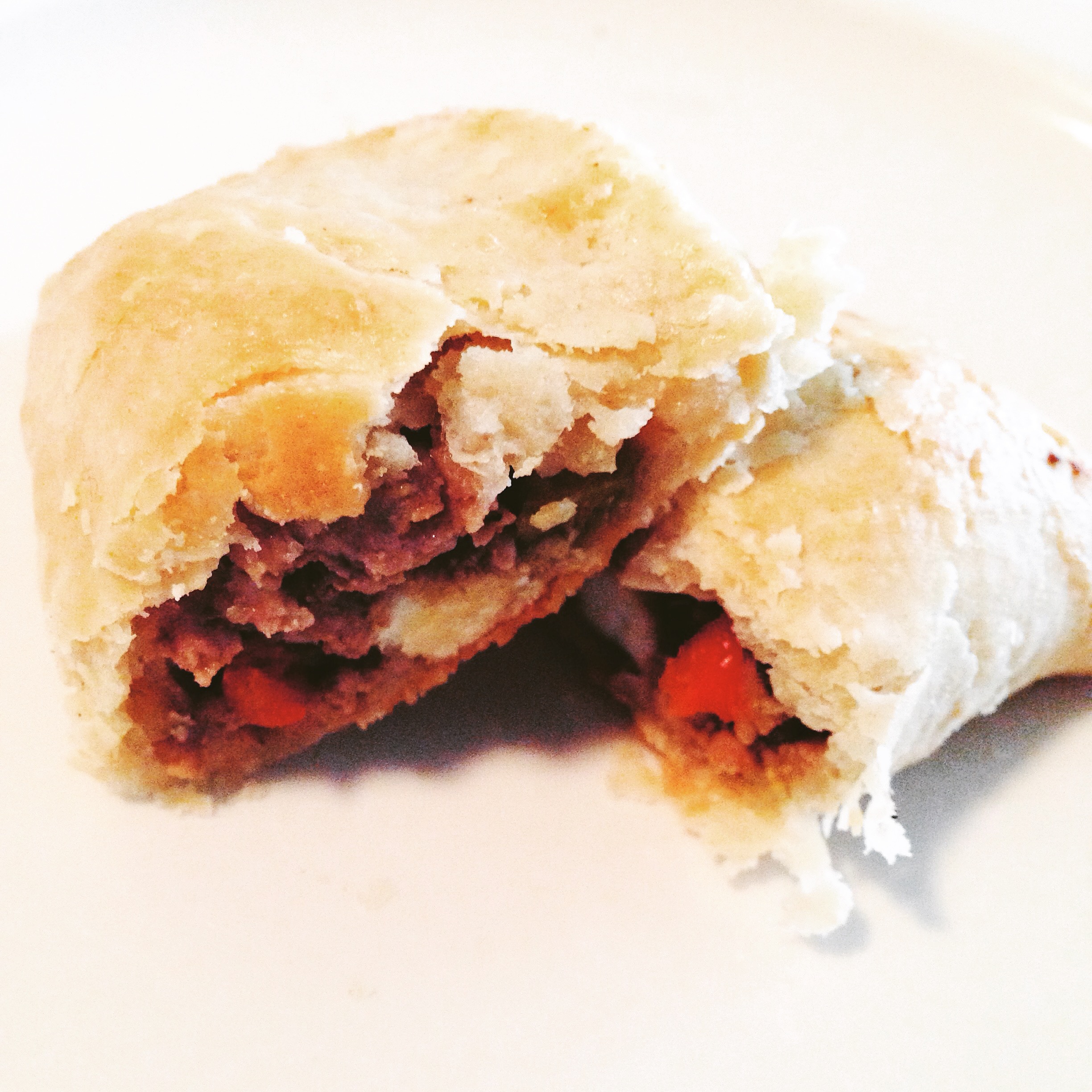
Since I’m a bit of a nut, I also decided to make empanadas, today. They’re filled with ground beef, shallots, red peppers, olives, raisins, honey, salt, pepper, and cumin. Gotta love making dough for both sweet and savory treats!

IMG_0952

Processed with VSCOcam with f2 preset

Moral of today’s entry: My obsessive behavior surrounding the creation of something new serves as the release valve for my undying anxiety…and the end results are usually pretty delicious. So, until I figure out how to mollify my constant state of anxiety, I think this’ll do just fine.

Menu Series: I’m still alive, and I’m back!

I know, I know – I really fell off the face of the food-making/eating/writing planet over the past two months. Those who know me are well aware that I had been chin-deep in gala planning for my (now former) organization. Though the Benefit went superbly, these events suck my time, energy, soul, and spirit, so I’m terribly happy that it’s all over.

Looking smart as hell as I hustle at the Spring Benefit

Looking smart as hell as I hustle at the Spring Benefit

For the past few weeks, I’ve been unable to cook and eat the way I like to cook and eat, which is decidedly the worst thing ever. An unmitigated disaster. For example, my stomach shrunk so much in the last month that I couldn’t even finish my egg, bacon & cheese croissant sammich, the other day (see photo below). Who am I? WHO AM I?

Processed with VSCOcam with hb2 preset

Anyway, I’m pleased to say that I’m entering a new era of my life and career, as I’ve accepted a role as Director of Development at a wonderful school in Brooklyn. The new gig starts on May 18th, so my plans for the coming week’s staycation are to cook, eat, relax, and repeat.

Because I’ve been eating small portions of junk for the last month or so, I really need this week’s meals to be both light and delicious. Without further ado, here’s the menu:

  • Steamed whole sea bass with ginger, garlic, and scallions + jasmine rice + spicy sauteed swiss chard
  • Nicoise salad (w/ arugula, tuna, German potato salad, olives, string beans, and hard boiled eggs) + rye bread
  • Kimchi fried rice w/ spam + arugula and roasted asparagus salad
  • Farro salad w/ roasted sweet potato, roasted carrots, radishes, pickled shallots, and crumbled feta cheese
  • Porcini mushroom risotto (w/ homemade roasted vegetable and chicken stock) + roasted brussel sprouts
  • Ddak bulgogi + jasmine rice + butter-braised brussel sprouts
  • Miso ramen w/ charred chicken, bok choy, mushrooms, and corn
  • Beef, olive and raisin empanadas (w/ homemade dough)
  • Plus: my very first attempt at making blueberry pie!

Coming up…On Trying Something New: Self-Doubt as Motivation, Plus a Recipe for Blueberry Pie

The Problematization of “Authenticity” Series: On Korean Food, Patriarchal Traditions, and a Mandu Recipe

As you may know, I’ve been cooking a lot of Korean(ish) food in the past month, a process I’ve identified as a way to honor and remember my late grandmother. Though I’ve been cooking actively for the past seven years, I have successfully avoided making the food of my people, partially out of laziness (a lot of Korean food takes loads of time and preparation), and partially because I have been really afraid of making something “inauthentic.” With this cuisine specifically, I’ve conflated inauthenticity with half-assedness, and fear that I have only half an ass. I haven’t had time to go to H-Mart to get real ingredients. I don’t have packets of dried anchovies for broth. Tubs of hot pepper or dry soy bean paste scare me. I’m obsessed with kimchi, but wanted to wait until I had a separate fridge for this stinky and fermented treat. Plus, my experience with Korean food is so inextricably linked to my memories of my mother and my grandmother, I felt like making something in a new tradition would be dishonorable.

So, what is authentic Korean food? And, a larger and perhaps more difficult question, what would it mean to be authentically Korean? I’ve been thinking a lot about the relationship between the term/concept and tradition. As someone born in this country, I am pretty ambivalent about many aspects of Korea’s customs and conventions. How do I both remain respectful of its (rather sad) history and practices, and simultaneously reject the institutionalized patriarchy of its Neo-Confucian core? There are a lot of things I admire about my heritage (whatever that means). I like that respectfulness and honor is a priority in a person’s demeanor. I like that Koreans value hard work as much as they value intelligence or raw talent. I think there’s something rather beautiful about harboring a mentality that thinks more about collectivism than individualism. But what do I do, for example, with its long history of disenfranchising women? According to Confucian and Neo-Confucian orthodoxy, women had (and still arguably have) a primary duty of providing a male heir for her husband’s family (women were not incorporated into family trees, because men were born from magical unicorns), they were/are often mistreated and abused by her mother-in-law (for reference, please watch any and all Korean soap operas), and, if she could not bear a son, her husband could haved divorce his wife or taken a second wife. The nation even adopted and implemented its very own comfort women to serve members of the U.S. military in camp towns (called kijich’on). All this to say: the things that I admire about the culture are not totally unrelated to the things that make me cringe, rage, and cry.

In order to reconcile these feelings, I try to understand the history that led to an adoption of exclusionary and psychically violent practices. Sure, postcolonial nationalism is often wrought with dogmatism and stringent understandings of ‘manhood.’ Yes, intense poverty often informs cultural policies. At some point, the Koryo Dynasty was possibly matrilineal. I’ve done some work in investigating this context. But still, I remain ambivalent, saddened, angry, and confused.

So, to be authentically Korean, do I need to honor all these traditions, even if they dictate that I am unworthy of respect or power because I was born with a vagina, because I am not subservient, because I have both career and familial ambitions, because I am shameless and lack a demure personality? And, how far back do I need to go in order to find that ‘originary’ tradition? I am prone to thinking that this is a relatively futile etude. Or, is it possible to pick and choose what I like, and wear that mangled identity with pride and absolution?

Let’s bring this back to food. As I’ve stated, I’ve been afraid of making Korean food because I didn’t want to mess with tradition (and by tradition, I mean the way my grandmother and mother made certain dishes). But, if it’s okay to pick and choose what I like about being Korean, maybe it’s also okay for me to pick and choose how I cook the dishes of my people. No, maybe I won’t always use the proper ingredients, but that doesn’t have to stop me from making and eating something I love, from altering a recipe to fit my tastes, time, budget, and possible laziness. Somehow, my grandmother’s passing has instilled me with more courage. I know it sounds weird, but I have needed courage in order to cook Korean food without feeling shame, embarrassment, or competitiveness. And my halmuni’s love, life, and passing has given me enough energy to make this food without reservation.

Without further ado, here is a homemade mandu (Korean dumpling) recipe:

IMG_0499

Mandu Recipe
Recipe adapted from Maangchi (I love the recipes on this site – be sure to check it out!)
10 servings
Prep time: 1 hour and 15 minutes (includes time to make homemade mandu skins)
Cooking time: 20 minutes

Ingredients

  • 1 lb of ground pork
  • 1 lb of ground beef
  • 2 cups of chives, chopped
  • 4 fresh shiitake mushrooms, diced
  • Half an onion, finely minced
  • Half a package of extra firm tofu, drained and smooshed
  • 2 cloves of garlic, finely minced
  • 2 teaspoons of salt
  • 1 teaspoon of black pepper
  • 1 teaspoon of sugar
  • 2 tablespoons + 2 teaspoons of sesame oil
  • 2 teaspoons of soy sauce
  • Mandu skins (see below for recipe)
  • Vegetable oil, for frying

Directions

  • Place ground pork and ground beef into a big bowl. Add 1 teaspoon of salt, 1 tablespoon of sesame oil, 1 teaspoon of black pepper, mix by hand, and push onto one side of the bowl.
  • In a small bowl, mix chives with 1 tablespoon of sesame oil and mix – place this next to the meat in the large bowl.
  • Mix diced shiitake mushrooms onions into a small bowl. Add two teaspoons of soy sauce, 1 teaspoon of sugar, and 1 teaspoon of sesame oil in a small bowl. Mix by hand and put into the large bowl.
  • Place the squished half package of tofu into small bowl, add a pinch of salt and 1 teaspoon of sesame oil and mix by hand. Place tofu mixture into the large bowl.
  • Add minced garlic, and mix all ingredients by hand.
    Processed with VSCOcam with hb1 preset
  • Take out your mandu skins. Put some filling mixture into the center of the mandu skin. Using your fingertips, apply a little bit of cold water to one edge of the round skin – this will serve as a sealant.
  • Fold the skin in half over the filling and press edges together. Fold the edges over in order to make the ripple effect and to securely seal the dumpling. Do this with your desired number of dumplings.
    Processed with VSCOcam with a5 preset
  • Put some vegetable oil on a medium heated pan (make sure you use a pan with a lid), and add the mandu. Lower the heat to a low-medium and put the lid on the pan to cook.
  • After 3 minutes, turn the mandu over. After cooking for a total of 6 minutes, carefully add 2 tablespoons of water and put the lid back on – this will ensure that the filling is fully cooked. After 2-3 minutes, take the lid off (be careful – oil might be splattering!) and cook for one more minute until the liquid is completely evaporated.
  • When mandu is golden and crispy, transfer onto a plate.

Mandu Pi Recipe
Recipe adapted from Maangchi
Makes 24-30 medium-sized wrappers (each about 4 inches in diameter)
Prep time: 45 minutes

Ingredients

  • 2 cups of all purpose flour, plus extra for dusting
  • ½ teaspoon of salt
  • 2/3 cup of water

Directions

  • In a large bowl, combine flour, salt, and water. Mix with a wooden spoon until it turns into one big lump. Knead the dough by hand for a few minutes until the dough gets a little bit softer. Put into a Ziploc bag and let it sit for 30 minutes.
  • Take the dough out of the bag and knead for 5-7 minutes, until it is smooth, dense, and elastic.
  • Place the dough on a cutting board dusted with a bit of flour and divide it into 2 equal pieces. Put half back into the Ziploc bag.
  • Cut the piece of dough into 12-15 equal sized pieces. Roll them into balls, squish them with your palm, and start rolling each piece out with a pin. The disks should be a little thinner on the outside than in the middle so that you can pinch the edges without much trouble. Do the same with the second half of the dough. Use them for your mandu

I actually ended up having a significant amount of mandu filling left after I finished making them. So, I added 1 teaspoon of Worchestershire sauce, an egg, made meatballs, and baked them at 450 F for 20 minutes. DELICIOUS.

Processed with VSCOcam with hb1 preset

Next on The Problematization of “Authenticity” Series: (White) Cultural Appropriators, a Defense for “Authenticity,” and a Recipe for Shrimp and Grits.

Last thing: Our dog’s name is Mandu (because I love dumplings so much, not because I’m going to eat him). And he is the cutest thing in the world.

IMG_0247

Weekly Menu Series: Remembering Halmuni

You might say that your grandmother made/makes the best […], and I’m here to tell you that you’re wrong. I’m going open my arms to my competitive streak and say that my halmuni (Korean for ‘paternal grandmother’) was the best cook in the whole fucking world.

Well, maybe that’s not nice. And not true. But I will say that my grandmother’s food was intensely stellar. In it, you could taste her love, energy, subtlety, and flavor, and you could take one bite and clearly infer what kind of woman she was. Of course, I know that taste and smell can catapult us into fond memories, and perhaps our history of mutual love and affection impacted/impacts the way I remember her dishes. Even if my tastebuds are colored by my feelings, I don’t think that makes my love for her food any less real, any less true.

My halmuni passed away, last week. In the past few days, I’ve been wondering why I haven’t been processing this news more proactively. God, Yejin, have a heart! But then I realized something: I’ve been cooking a lot more Korean(ish?) food, as of late, which is pretty unusual for me. Cooking and eating stuff that reminds me of her has, in a small way, helped me to start figuring it out (it = life). So, as someone who loves food and family, I thought I would craft a menu that catapults me into the back of halmuni’s car as she drove me to ballet class. Flavors that remind me that even though I have lost too many people in my relatively young life, I have received and experienced an immense amount of love. Food that help me to remember the ways in which my grandmother was largely responsible for fueling my obsession with eating, guilty of forming my palate.

So, without further ado, here’s next week’s menu:

(I also threw in a couple of pasta dishes, so my husband’s very Italian tastebuds don’t get too homesick)

  • Saeng sun jun (lightly battered and pan fried fish fillets) + jasmine rice + sauteed bok choy in garlic sauce + flash fried shishito peppers with sea salt flakes
  • Homemade fried mandu (with handmade dumpling skins) + jasmine rice + cabbage salad
  • Galbijjim (beef shortrib stew with onions, carrots and radishes) + jasmine rice + hobak jun (fried zucchini)
  • Ginger Chicken Jook/Congee (rice porridge) topped with fried shallots, salted roast peanuts and gai lan + flash fried shishito peppers with sea salt flakes
  • Rice mixed with shredded jangjorim (beef boiled with soy sauce and some aromatics), jangjorim sauce, and sesame oil, topped with a peeled soft boiled egg + sauteed zucchimi
  • Farfalle with hot Italian sauage, broccoli rabe, anchovies, and hot pepper flakes
  • Fusilli with cherry tomato sauce + roasted broccoli rabe

And, here are a couple of photos of my beautiful halmuni:

grandma's family, looking classy and fly as hell

grandma’s family, looking classy and fly as hell

halmuni's beauty is clearly overshadowing my face

halmuni’s beauty is clearly overshadowing my face

On Feeling Fat, plus a Recipe for Shanghai-Style Braised Pork Belly

I think we all experience days when we feel gross, ugly, and maybe a little bit “fat”. Here are signs that I am about to have one of those days:

  • My pants fit fine, but they somehow feel like they’re made of an unforgiving metal material that is cutting into my belly;
  • Muumuus suddenly look really fashionable, and I have 4-5 different ones queued up in my Etsy cart;
  • My belly, inner thighs, arms, and cheeks (areas that have a little extra meat) are all insanely itchy;
  • I look in the mirror, cringe, and dramatically ask, “WHY!?”;
  • I convince myself that I’m going to become a martial arts master and lose a zillion pounds, even though my brain knows all of that is ridiculous.

These feelings often have nothing to do with weight, size, or appearance. I’ve discovered that my overall feeling of self-worth (which includes appearance) is inextricably linked to productivity, and whether I see myself as intelligent.

I’m rather mean to myself, which may or may not be obvious at this point. I think my obsession with personal/professional growth, my consistent desire to be prolific and competitive, my general state of anxiety, it all stems from a deeply embedded belief that I am not naturally good at anything, not naturally smart or gifted. I’ve built this narrative that positions Yejin as someone with no raw talent, but also as someone who can overcome that misfortune through practice and hard work. Without my industrious and near-OCD behavior, I feel like I would be left with the core of my being, which is nothing more than mediocre. I constantly dare myself to do better and be better because I want to prove myself wrong. All this to say: when I am stripped of my possibly superficial layers of self-confidence, I feel unintelligent and uninspired. And ugly. I don’t bring this up so that others will say things like, “Awww…that is so untrue!” In fact, external validation does little, for me. And my whiny little pity party doesn’t need any additional guests, believe me. I mention this overly exposed and vulnerable mess of an overshare simply because I’m proud…proud that I’m working on being nicer and more understanding, proud that I’m getting better at practicing a more profound compassion for myself and for others.

If I caught one of my loved ones saying this shit to themselves, I would grab them by the ears, drag them to a mirror, and gently scream at them to see what I see: a beautiful, thoughtful and amazing human being (this is why I would be a terrible counselor, by the way). Rather than continue on this destructive and unsustainable path, I’m trying to figure out how to be kinder and less dramatic, and how to convince myself that I don’t need these additional layers of ‘accomplishments’ in order to prove that I’m worthy of my own confidence, pride and love. And, guess what helps? FOOD. PORK BELLY. Obviously.

When I’m hating on my body (read: feeling unintelligent/uninspired), what makes me feel better is not “healthy” food, but fatty stuff. It’s counterintuitive, I know. But on the occasions I’ve made myself eat nothing but raw fruits/vegetables, quinoa, tofu, tempeh, etc., I felt like I was punishing myself for something. I created an archetype of what a “successful” person would eat, and I ended up hating the food and feeling even worse about not being the kind of person who would genuinely enjoy eating exclusively healthy things (in my brain, those are the same folks who enjoy a zillion mile run at 6am).  Which is terrible, because those foods are also delicious. So, as I mentioned in my entry on cravings, I had to find a way to dissociate punishment from food and eating. My current strategy: to make myself something that really delights me, something that makes my body feel warm and cuddly and squishy and comforted…something fatty. Of course, eating fatty and delicious stuff isn’t and shouldn’t be a permanent solution to my self-inflicted woes, but it does make me happy, if only for a moment.

For a super tasty pork belly dish, check out the recipe below.

IMG_0300

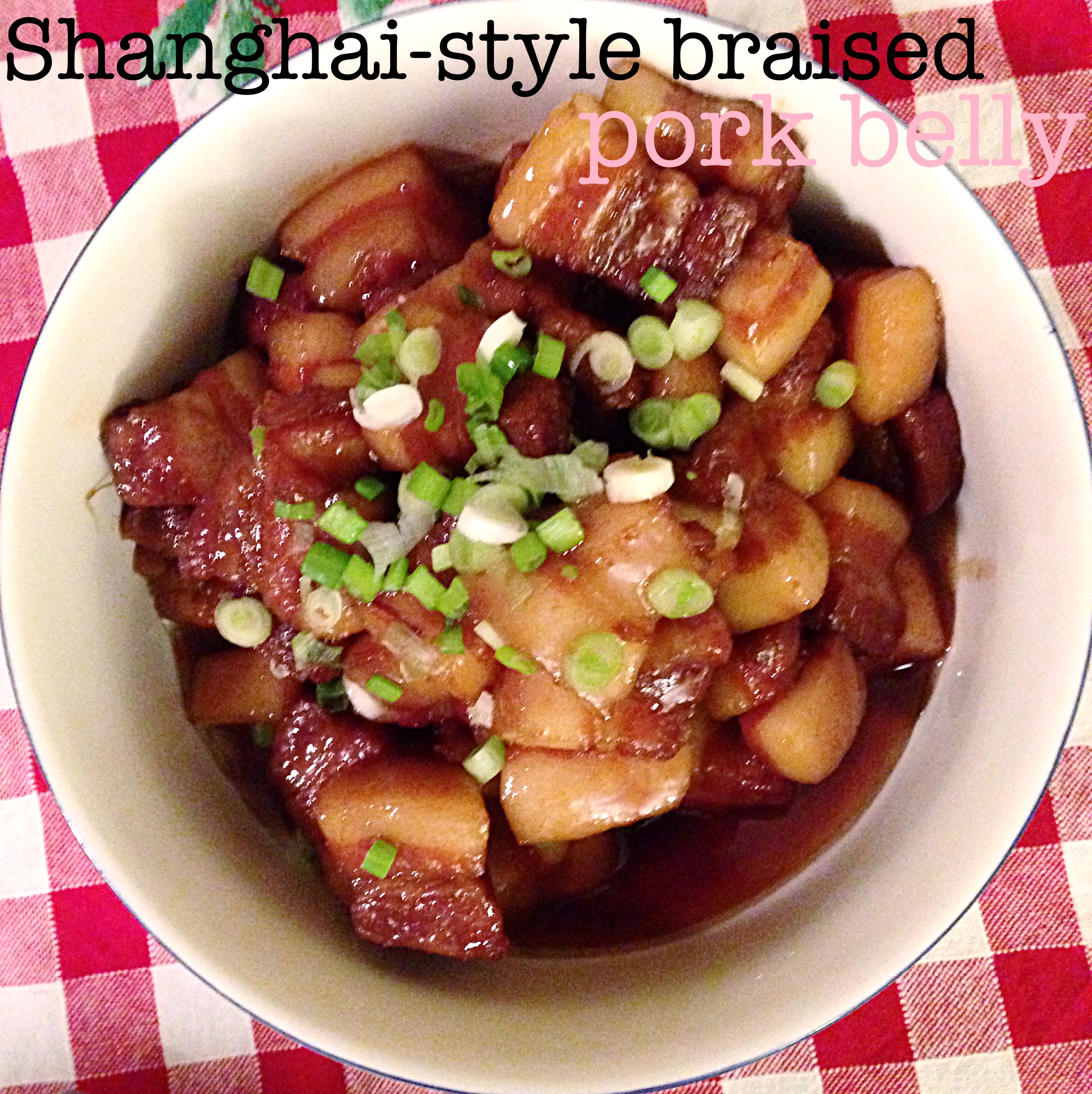
Shanghai-Style Braised Pork Belly
Adapted from The Woks of Life
Servings: 6-8
Prep Time: 15 minutes
Cooking Time: 75 minutes

Ingredients

1 ½ lbs of pork belly, cut into ¾ inch pieces
3 tablespoons of canola oil
3 tablespoons of sugar
6 tablespoons of shaoxing wine (I used dry sherry)
4 tablespoons of soy sauce (original recipe calls for both light and dark soy sauce but I didn’t have any dark soy sauce on hand. It tastes yummy this way, but the sauce is lighter in color and less ‘authentic’)
4 cups of water

Directions

  1. Bring a large pot of water to a boil, and blanche the pork after boiling for a couple of minutes (this will get rid of some impurities and start the cooking process). Drain the pork and set aside.
  2. Put your wok over a low heat, add oil and sugar and stir for 1 minute. Add the pork, and raise the heat to medium. Cook until the pork is lightly browned, around 4 minutes.
  3. Turn the heat back down to low and add the cooking wine, soy sauce, and water. Cover and simmer for about 1 hour until the pork can be easily pierced by a fork.
  4. Once the pork is tender, there will still be a lot of extra liquid. Uncover the wok, turn up the heat, and let the liquid reduce for about 15 minutes, stirring frequently. The pork will reduce to a shiny, thick, brown sauce.
  5. Serve over rice, and EAT EVERYTHING.

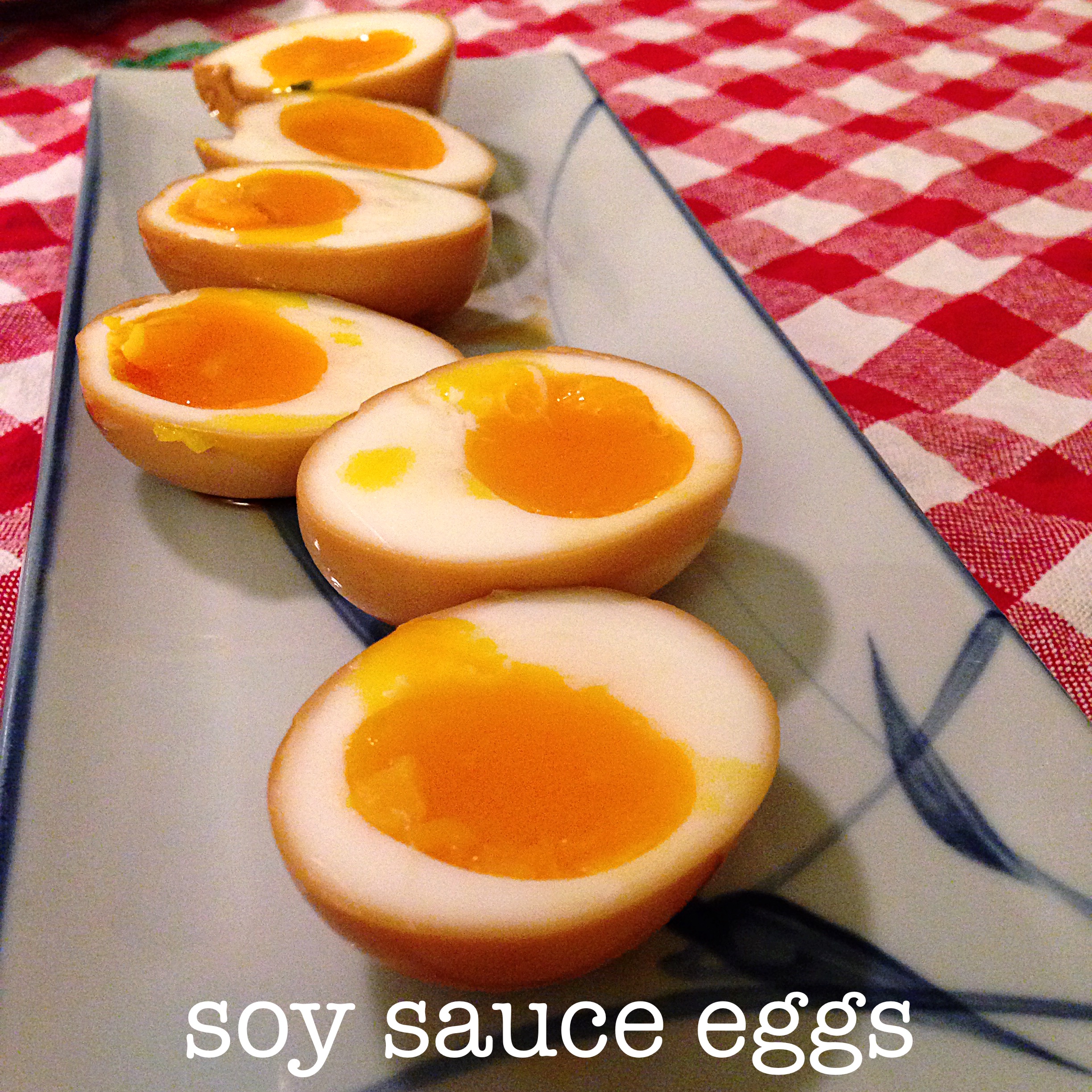
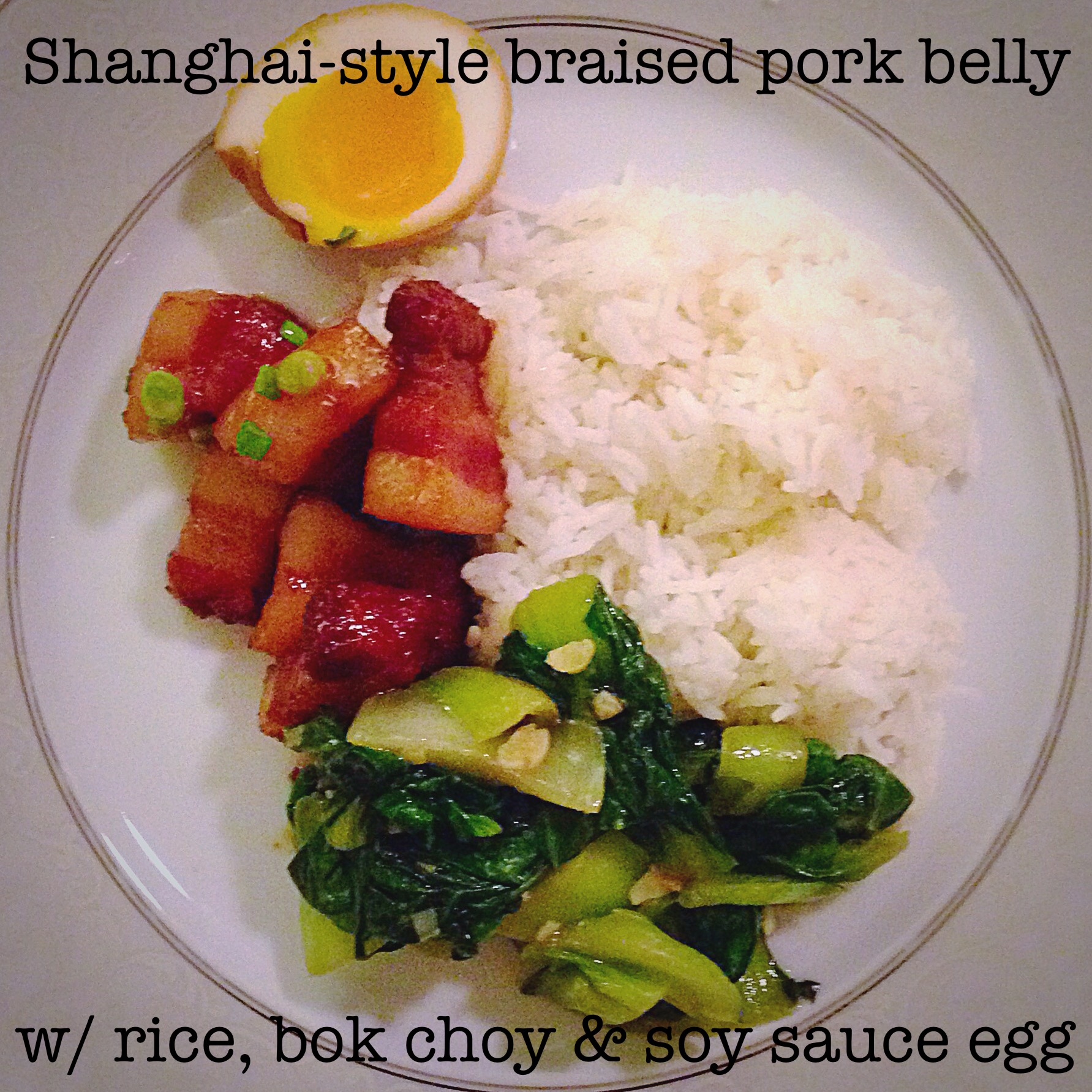
I served this with rice, sauteed bok-choy with garlic sauce, and soy sauce eggs.

IMG_0293

IMG_0315

Note: I recognize that I may be using the concept and feeling of “fatness” in a pejorative way, at least when it comes to analyzing myself. My intention is not to be fat-shaming, but to show the ways in which my general feeling of self-worth determines the way I feel about my body (in a society that is, in fact, fat-shaming). 

The Problematization of “Authenticity” Series: On Italy, Traditions, and a Recipe for Pasta e Fagioli (aka Pasta Fazool)

Longest title of all time.

I harbor deeply ambivalent feelings on the utility of “authenticity” as both a concept and a measure of something’s realness. Because there is so much to unpack, and because I don’t want to subject my readers to longass entries, I decided to start a series within the blog on this particular subject. Today, I will use my status as the wife of an Italian to talk about Italy and tradition. I offer no solutions or answers about authenticity in this entry, only the questions that bounce me back and forth between the benefits and detriments of the term. And, cuisine provides us with an interesting, safe, and delicious entry point into this conversation (isn’t it more comfortable to talk about an authentic recipe, as opposed to what it means to be authentically southern, black, Asian, etc?).

Here’s one of the things I hate most about authenticity re food: it necessitates an essentialized understanding of something that is, at its core, socially constructed…the nation-state. And, even if you break the nation-state down into smaller counterparts for the sake of precision, how do we identify the originary thing?

I was once gently admonished by a bona fide Italian that my Pasta e Fagioli was inauthentic, because it wasn’t cooked with lard and bits of pancetta. Boy, did I have feelings about that (top among them, an intense longing for lard and pancetta). Many of the Italians I know (and I do have a fair sample size, since my husband is an immigrant from what I call The Country of Cheese) identify with their province or region of birth, not with the country, which is pretty green in its current form as a republic. So, asking them whether something is authentically “Italian” is a bit senseless. You can, however, ask them about the foods of their region, and they will have very strong opinions about: (1) what ingredients should be included in a dish; (2) what ingredients should and should not be combined; (3) which region in Italy makes the best of [anything]; (4) blahblahblah. Tradition is everything.

(A word of advice: Never tell an Italian to put chicken in a pasta dish. They will make a disgusted and baffled face, and endlessly make flailing hand gestures)

Here’s a hilarious example of what happens when someone tries to de-Italianize a recipe:

But, even within each of these towns that are filled with their own histories and traditions, everyone’s mama makes food a bit differently, and isn’t that a beautiful thing? But, where does that leave poor little authenticity? I love Italy for its endless supply of cheese, wine, salumi, pasta, risotto, etc – whenever I’m there visiting Nico’s family, I end up eating my weight in amazing food. I think so much of the country’s great culinary accomplishments have to do with tradition. As the saying goes, if it ain’t broke, don’t fix it. When the food is so goddamn good, and comes from hundreds of years of practice and perfection, why change anything?

But Italy isn’t really a country of innovation, and it’s also not a country that is doing all that well in welcoming immigrants with different experiences and palates (sorry, Country of Cheese…I do love you). My point is this: not only is it kind of a silly pursuit to identify an originary taste or dish or meal, it’s also an inherently exclusionary position, especially if you are heralding all things authentic (when authenticity has to do with Italian ‘pedigree’) and poopoo-ing all things divergent. I think there is a way to honor tradition while simultaneously absorbing new people, contexts, histories, and tastes. Look at Spain! Look at France! Italy…if anything will jump start a process of culinary innovation and inclusion, it’s the knowledge that you are falling behind…France.

I have what may be a totally “inauthentic” recipe for Pasta e Fagioli (lovingly known as “pasta fazool” in this country), but it’s pretty yummy. It’s informed by Nico’s taste-based memory of his mom’s soup, and a little by my mild disdain for dishes that have zillions of ingredients.

As you know, I made a bunch of stock last week, which left me with enough for this delicious soup. I’m a little baffled by how many recipes on the internet are trying to recreate The Olive Garden’s version…yikes…?

Anywho,  I sometimes include pancetta in this dish (which I’ve included in the recipe), but since I made three pounds of incredibly fatty pork belly, this week, I thought I would keep this soup a bit lighter. I also did something weird and topped the pasta fazool with sauteed swiss chard. The dish is naturally sweet from the vegetables, and I like to balance that with a bit of bitter, salty, and spicy flavors.

If you’re looking for a comforting, thick, creamy (but not heavy) soup, try this out! Here it is:

IMG_0329

Yejin’s Pasta e Fagioli

Servings: 6
Prep Time: 15 minutes
Cooking Time: 30 minutes

Ingredients

2 tablespoons of olive oil
4-6 ounces of pancetta, diced (optional)
1 white onion, chopped
3 large carrots, roughly chopped
2 ribs of celery, roughly chopped
2 cloves of garlic, roughly chopped
4 cups of chicken stock (homemade or purchased)
2 tsp of kosher salt
2 cans of cranberry/roman beans, drained
egg noodles
¼ cup of freshly grated grana
Sauteed Swiss Chard w/ Garlic, Anchovies, and Crushed Red Peppers (RECIPE BELOW)
Drizzle of quality olive oil to top

Directions

  1. In a large and heavy-bottomed pot, heat the olive oil over medium heat. If you’re using pancetta, add to the pot and cook until the fat begins to render, about 5 minutes. I like to take the pancetta out of the pot and place onto a paper towel lined plate. After ladeling the soup into a bowl, I like to sprinkle the pancetta on top. You can also keep the pancetta in the soup…up to you! Add the onion, carrot, celery, and garlic and cook for 5 minutes, stirring frequently.
  2. Add the chicken stock and bring to a boil. Reduce the heat to a medium low and simmer, uncovered, until the vegetables are tender (can be easily pierced with a fork), about 20 minutes. Add cranberry/roman beans and cook for another 5 minutes.
  3. Pour the broth/vegetable mixture into a large mixing bowl. Do your thing with an immersion blender or a regular blender (I don’t use the immersion blender in my nice pot). I like to puree the whole thing so that the soup is creamy perfection, but some people like to puree half and keep the other half as is. Add more broth or water if you want to thin the soup out.
  4. Return your soup into pot and taste for salt. Cook over low heat, stirring occasionally.
  5. In the meantime, bring water to a boil in a separate pot. Cook egg noodles according to package instructions. Drain and use a slotted spoon to place noodles in your serving bowls.
  6. Ladel soup over the noodles in your serving bowls.
    (Cooking the noodles directly in the soup will mean that your leftovers will be filled with overcooked pasta…no good!)
  7. Sprinkle with desired amount of shredded grana (and pancetta), top with sauteed swiss chard, and drizzle quality olive oil.
  8. ENJOY

Sauteed Swiss Chard with Garlic, Anchovies, and Crushed Red Pepper

Servings: 2
Prep Time: 10 minutes
Cooking Time: 10 minutes

Ingredients

1 bunch of rainbow swiss chard, tough stalks discarded and leaves cut into ribbons
1 clove of garlic, minced
1 tablespoon of olive oil
2 anchovies, finely chopped
¼ tsp of crushed red pepper
Salt

Directions

  1. Place swiss chard leaves in a bowl with cold water. Rinse out the leaves thoroughly to remove sediment.
  2. Bring a pot of water to a boil and add swiss chard leaves. Cook the leaves for 5 minutes in boiling water, drain, and place under cold running water. When the chard is cool enough to the touch, squeeze the water out.
  3. Heat a saucepan on a medium heat setting. Add the olive oil, minced garlic, anchovy, and crushed red pepper and saute for about 2 minutes. Add the swiss chard leaves, bring heat to medium-low, and continue cooking for 5 minutes.

Coming up: On Being Healthy + A Recipe for Pork Belly

Weekly Menu Series: On Soups + Leftovers

As I’ve previously mentioned, my anxiety around unused food and leftovers was, at least initially, the primary motivation for creating an obsessive menu of meals. Looking at wilted/slimy greens and gray meat in my fridge would really bum me out, so I decided that I had to know exactly how much of everything I needed to buy, which necessitated a full schedule for the week (since I didn’t want to do grocery shopping every day). One thing that brings me great joy is strategically using leftovers for another meal – it transforms my reactive obsessions/compulsions into a proactive process.

This week’s meal menu was inspired by my need for soup. Though winter is starting to melt (thank gods), when I created this schedule, the cold was settling in my bones and all I wanted to do was bathe in simmering stock. The great thing about making broth is that several meals can stem from it and its leftovers. I usually make broth with a whole chicken + roasted vegetables (I find that roasting the vegetables makes for a deeper, richer, and warmer experience, which is what I want when we’ve had the winter from a frozen hell), and it leaves me with enough for three separate dishes plus loads of boiled chicken for a yummy chicken salad. For this schedule, the stock/chicken is being used for: white bean, escarole & sausage soup; pasta e fagioli (pasta fazul); radicchio risotto; and chicken salad.

Here is the week’s schedule.

Sunday, March 8

  • To Do: Make stock
  • To Do: Make chicken salad (from the stock)
  • Lunch: n/a (in NJ)
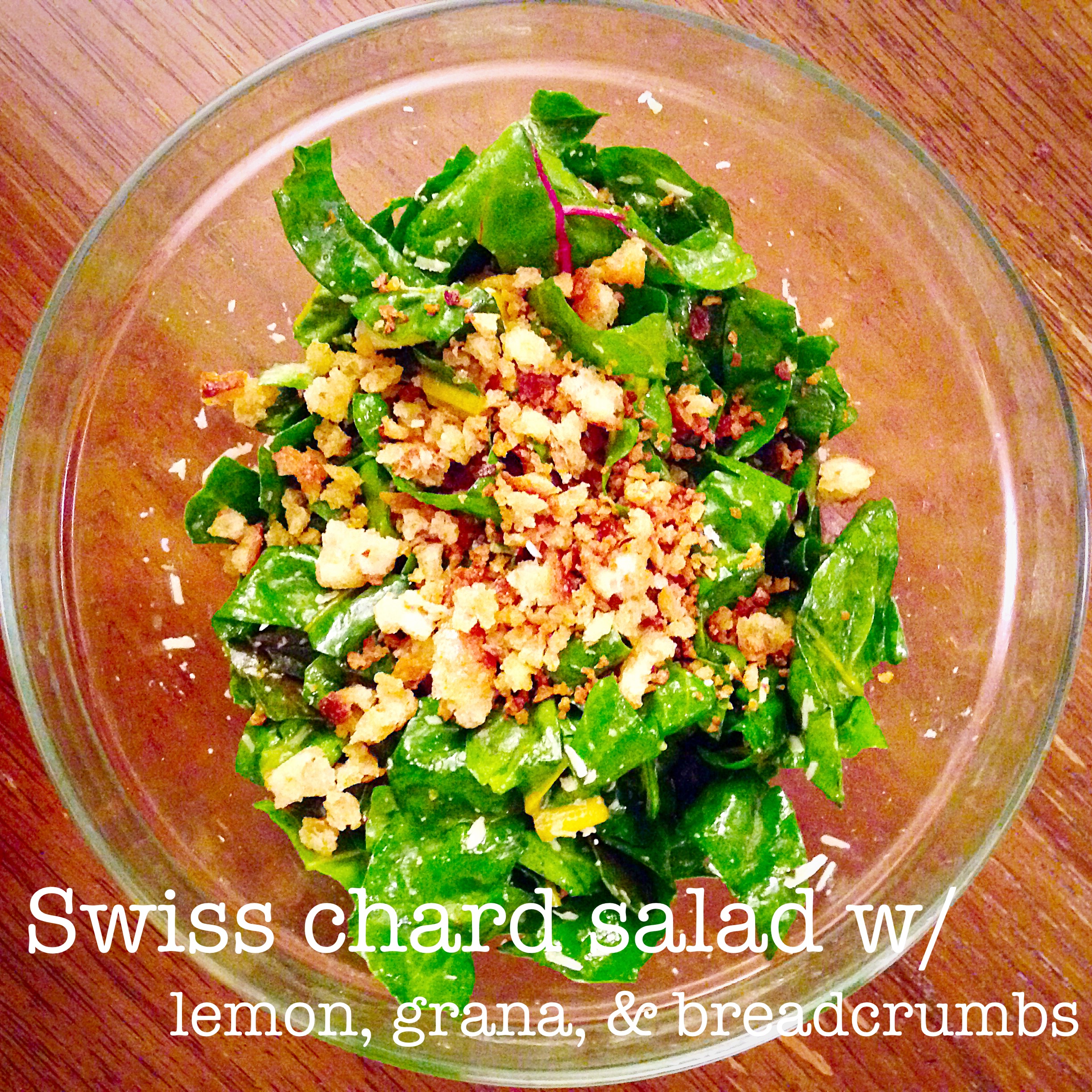
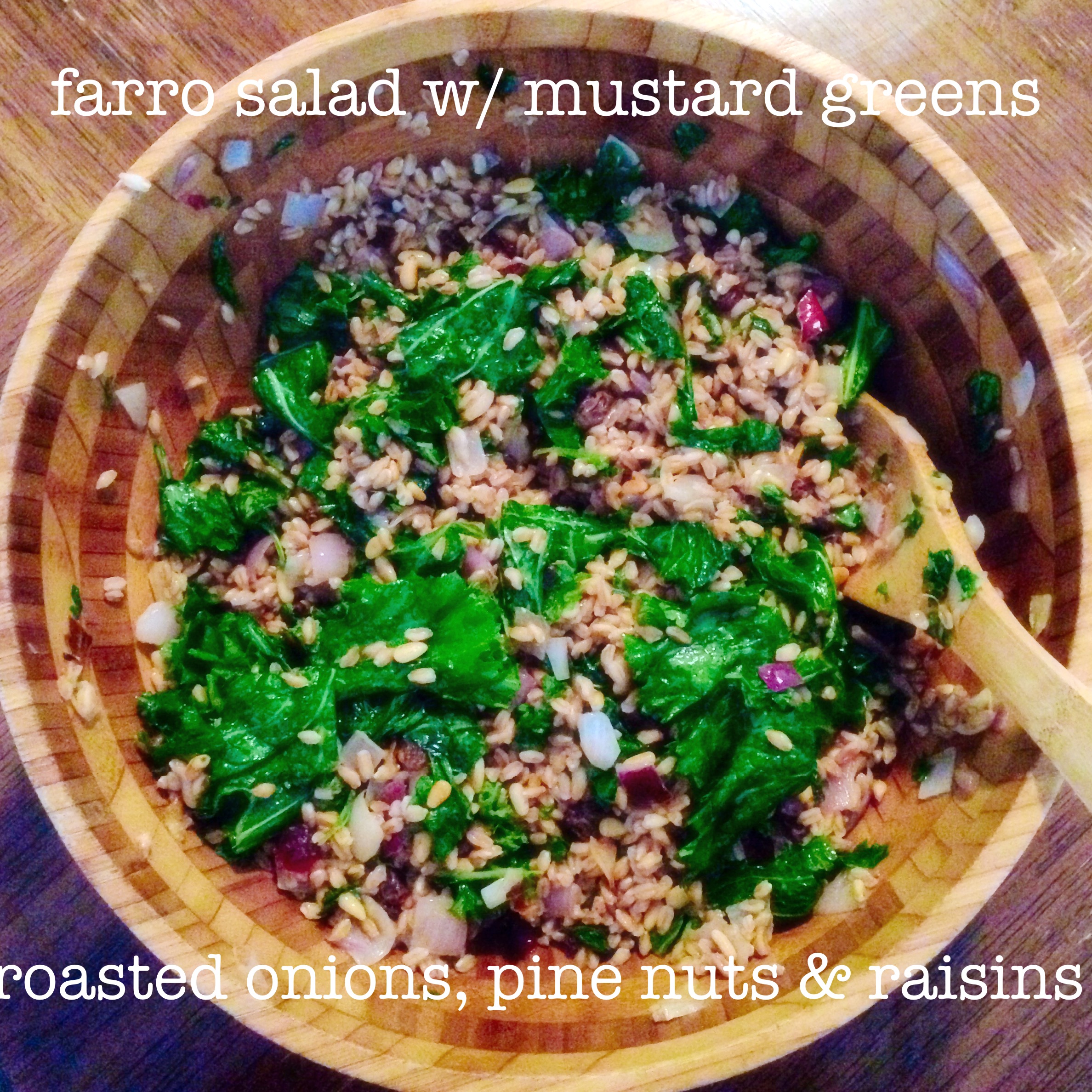
  • Dinner: White bean, escarole & sausage soup + bread + farro salad w/ roasted onion, toasted pine nuts, currants, and mustard greens 

IMG_0241

Monday, March 9

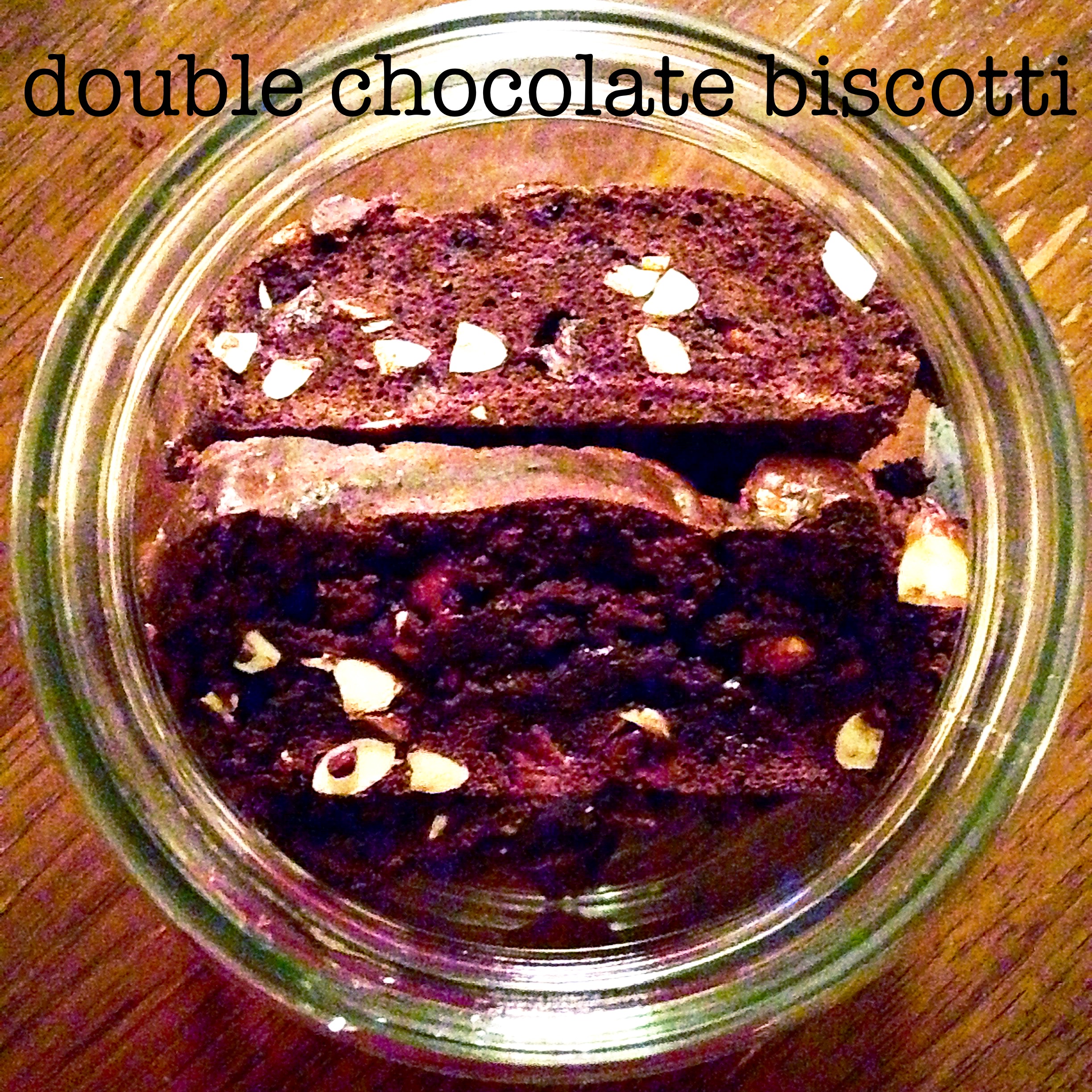
  • To Do: Make double chocolate biscotti
  • Lunch: Chicken salad sammies
  • Dinner: Leftover soup + bread + swiss chard salad with lemon, grana & homemade breadcrumbs
  • Dessert: Double chocolate biscotti IMG_0251IMG_0253

Tuesday, March 10

  • Lunch: Leftover farro salad
  • Dinner: Chicken legs baked with white wine + french baguette + salad with prosciutto & pear IMG_0237

Wednesday, March 11

  • Lunch: Leftover chicken
  • Dinner: Pasta e fagioli + salad with prosciutto & pear

Thursday, March 12

  • Lunch: Leftover pasta fazul
  • Dinner: Crispy pork belly + white rice + sauteed bok choy in garlic sauce

Friday, March 13

  • Lunch: Leftover pork belly
  • Dinner: Pizza two ways (margherita + speck/onion)

Saturday, March 14

  • Lunch: Leftovers
  • Dinner: Radicchio risotto

Coming up: On Authenticity, plus  recipe for my Pasta e Fagioli

Note: The “brevity” of this entry is either a disappointment, a relief, or nothing. The week has been a bit crazy because of family stuff and work, but I promise to make the next entry a doozy!

On Being a “Bad” Korean, Identity Politics, and a Dak Bulgogi Recipe

Excepting my immediate family, I didn’t grow up around many Koreans, so my understanding of what it means to be and look like a good one is based on one main thing: reiterations of a stereotype from a variety of sources. Adjectives I would use to describe the ‘ultimate’ Korean woman are: deferential, passive, overachieving, obsequious, and hardworking.

In many ways, I was good at fulfilling expectations/stereotypes at the start of my life. I played piano competitively (you have my permission to cry and/or laugh), became jealous of my older brother when he was “lucky enough” to go to Kumon (which resulted in my fabrication of math homework at home, which made no sense because I didn’t understand the meaning behind numbers), performed well in school, and desired achievement in all my bougie activities (including flute, choir, solo classical singing, and ballet). Parental expectations were high, but even at a very young age, my expectations of myself were even higher and more unattainable. And, to top it off, I was absurdly obsequious. Though I wasn’t gifted in math or science (I think I peaked in middle school), so far I sound like a pretty good Korean, right? Right.

Little Yejin as a good Korean

Little Yejin as a good Korean

Good Korean Yejin, in a bougie ballet

Good Korean Yejin in a bougie ballet

Enter college. I blame (read: appreciate) college for unveiling a whole mess of complexity around my identity as a Korean and person of color. During my first semester as a freshman, I took an upper level history class on black modernity, which was taught through the lens of Ralph Ellison’s Invisible Man. Dope. I really had no business being there, because I wasn’t learned or capable enough (at the time) to fully understand a lot of the material, but I’m so glad I took that course because it sparked a piece of me that remains at my core: an investment in antiracism work and identity politics. This newly discovered passion coupled with my not-great experience with some Koreans and Korean-Americans on campus (who didn’t want to initially befriend me because I didn’t share their interests or religion, and, my personal favorite, because I didn’t look super Korean), moved me to bypass that part of my identity and start thinking of myself solely as a person of color. Goodbye, KPOP! Goodbye, Morning Glory! Goodbye, obeisant Yejin!

yejin6

College/Bad Korean Yejin with too many mismatched piercings, necklaces, and opinions.

But, as I started understanding my own privileges (of which there are many), I engaged in a lot of difficult conversations with mostly black and brown students about whether East Asians should be included in the ‘person of color’ identifier, at all. We had interesting, sad, and passionate discussions about whether a hierarchy of oppression exists, and how the answer should impact our daily interactions and our work. My first instinct was to be an ally to those who experience a different type of systemic, cultural and interpersonal racism, and to fully agree that there was no reason to be grouped all together. I rejected the importance and relevance of my background and focused solely on how Asians could and should be allies to our black and brown brothers & sisters.

Around the same time, I took an amazing and challenging US immigration history course, where I learned more about the Chinese Exclusion Act, the extremely racialized nature of immigration policy, and the intricate relationship between immigration, labor, and whiteness. I focused a lot of my time researching the third and fourth waves of immigration, and came to a new conclusion: that shit was complicated. I began to push back against the argument that Asians don’t experience racial discrimination (beyond the “ching chong” comments), not because I wanted to acquire some counter cultural capital, but because I began to see how power operated on a systemic and policy level to undermine non-white people, and, importantly, because I began to see the limitations of identity politics.

I am a middle-class Korean-American whose father is a dentist. I experience great privilege regarding class, education and gender identity, among other things. I am not poor. I have never been profiled or stopped-and-frisked by the police, nor do I fear for my safety, life, and constitutional rights when I see a cop. I am also not all Korean Americans or East Asians. I am not a working migrant laborer without documentation who speaks minimal English. I am not a child of working-class immigrants in Flushing who serves as the sole translator between their parents and [name any institution]. And I realized: to exclude any Korean or Asian history or experiences from anti-racism organizing would be a mistake.

The ‘person of color’ identity suddenly was not enough by itself. Without constantly locating my different and moving privileges (and experiences of discrimination), I couldn’t be a proper aspiring ally to my comrades. And without identifying as a person of color, I didn’t feel like I could incorporate the complexity of racial history and practices of oppression in my work and life. This meant that I was ready to invite my Korean-American identity back into my world. Hello, old friend!

For whatever reason, people have a really hard time accepting that they have specific types of power and privilege. I’ve never had that problem, and I’m grateful for that. Ultimately, I still think I’m a pretty “bad” Korean when it comes to the stereotype. I can be a bit abrasive. I still suck at math. I’m definitely not passive. I am an intense over-sharer (as you can tell). But, what on earth should it mean to be a good one? I hate when people say things like “a real/good American would…blahblahblahiamsoboring” in order to justify an exclusionary and simplistic tenet (e.g. ‘real Americans don’t take handouts from the government’). In response, I try to broaden the frame. Good Americans care deeply for those in poverty. Good Koreans care deeply for their black and brown brothers and sisters. So, maybe, just maybe, I’m not so bad.

“Our challenge, as we enter the new millennium, is to deepen the commonalities and the bonds between these tens of millions, while at the same time continuing to address the issues within our local communities by two-sided struggles that not only say ‘No’ to the existing power structure but also empower our constituencies to embrace the power within each of us to crease the world anew.”
– Grace Lee Boggs, The Next American Revolution: Sustainable Activism for the Twenty-First Century

And now, for a recipe. Korean food. Ugh, how I love Korean food. But, I’m lazy. Well, I guess that’s probably not super true. But I’m lazy when it comes to making Korean food because I don’t feel like going to H-Mart for ingredients, and Korean food requires a lot of preparation that I don’t really have time for on weekdays. But, this recipe is pretty quick, easy, tasty, and makes the apartment smell SO GOOD (and vaguely Asian) for hours.

IMG_0223

Ddak Bulgogi (Korean BBQ Chicken)

(adapted from Korean Bapsang’s recipe)
4 servings
Prep time: 15 minutes
Cooking time: 15 minutes

Ingredients:

1 ½ pound boneless chicken thigh (I don’t like cooking with chicken breast, but you can use whatever you want!)

Marinade:

3 tablespoons soy sauce
1 tablespoon lemon juice
2 tablespoons honey
1 tablespoon rice wine (or mirin)
1 tablespoon minced garlic
1 teaspoon grated ginger
1 tablespoon sesame oil
pinch black pepper
1 teaspoon sesame seeds (This is optional. I never do it because I always forget to get sesame seeds and it turns out fine. But I’m sure it’s tasty to include!)

Directions

  1. Rinse chicken pieces and dry them with a paper towel. Using a sharp knife, cut each of the chicken pieces into your desired size. I like to cut them so they’re around two inches wide and two inches long. Make sure each piece is around the same thickness.
  2. In a large bowl, mix the marinade ingredients in a bowl until the honey is fully incorporated. Optional: Take a whiff of that incredible smell,
  3. Put chicken in the bowl and mix until each piece is coated in the marinade. Cover with plastic wrap and refrigerate for at least 30 minutes.
  4. Take the chicken out of the fridge and give it a good mix. Cover with plastic wrap and let it sit for 15 minutes.
  5. Preheat a skillet over medium high heat. Add a drizzle of canola oil and add chicken pieces, reserving the marinade. Do not overcrowd the pan. I usually do this in two batches. Cook for about two minutes on each side until the chicken is cooked through and slightly caramelized, about 2 minutes each side. If you think the pieces are starting to burn, you can take some of the marinade and spoon it over the chicken. You can also ever-so-slightly reduce the heat.

Serve this with white rice and some sauteed veggies, and you got yourself a kind-of-Korean dish. I also like to have something tangy with this chicken to balance the umami of the marinade. Kimchi, pickles, salad, whatever!

IMG_0224

(I ate this with jasmine rice, roasted asparagus, and fried tofu + spicy ginger garlic sesame sauce)