On Feeling Fat, plus a Recipe for Shanghai-Style Braised Pork Belly

I think we all experience days when we feel gross, ugly, and maybe a little bit “fat”. Here are signs that I am about to have one of those days:

  • My pants fit fine, but they somehow feel like they’re made of an unforgiving metal material that is cutting into my belly;
  • Muumuus suddenly look really fashionable, and I have 4-5 different ones queued up in my Etsy cart;
  • My belly, inner thighs, arms, and cheeks (areas that have a little extra meat) are all insanely itchy;
  • I look in the mirror, cringe, and dramatically ask, “WHY!?”;
  • I convince myself that I’m going to become a martial arts master and lose a zillion pounds, even though my brain knows all of that is ridiculous.

These feelings often have nothing to do with weight, size, or appearance. I’ve discovered that my overall feeling of self-worth (which includes appearance) is inextricably linked to productivity, and whether I see myself as intelligent.

I’m rather mean to myself, which may or may not be obvious at this point. I think my obsession with personal/professional growth, my consistent desire to be prolific and competitive, my general state of anxiety, it all stems from a deeply embedded belief that I am not naturally good at anything, not naturally smart or gifted. I’ve built this narrative that positions Yejin as someone with no raw talent, but also as someone who can overcome that misfortune through practice and hard work. Without my industrious and near-OCD behavior, I feel like I would be left with the core of my being, which is nothing more than mediocre. I constantly dare myself to do better and be better because I want to prove myself wrong. All this to say: when I am stripped of my possibly superficial layers of self-confidence, I feel unintelligent and uninspired. And ugly. I don’t bring this up so that others will say things like, “Awww…that is so untrue!” In fact, external validation does little, for me. And my whiny little pity party doesn’t need any additional guests, believe me. I mention this overly exposed and vulnerable mess of an overshare simply because I’m proud…proud that I’m working on being nicer and more understanding, proud that I’m getting better at practicing a more profound compassion for myself and for others.

If I caught one of my loved ones saying this shit to themselves, I would grab them by the ears, drag them to a mirror, and gently scream at them to see what I see: a beautiful, thoughtful and amazing human being (this is why I would be a terrible counselor, by the way). Rather than continue on this destructive and unsustainable path, I’m trying to figure out how to be kinder and less dramatic, and how to convince myself that I don’t need these additional layers of ‘accomplishments’ in order to prove that I’m worthy of my own confidence, pride and love. And, guess what helps? FOOD. PORK BELLY. Obviously.

When I’m hating on my body (read: feeling unintelligent/uninspired), what makes me feel better is not “healthy” food, but fatty stuff. It’s counterintuitive, I know. But on the occasions I’ve made myself eat nothing but raw fruits/vegetables, quinoa, tofu, tempeh, etc., I felt like I was punishing myself for something. I created an archetype of what a “successful” person would eat, and I ended up hating the food and feeling even worse about not being the kind of person who would genuinely enjoy eating exclusively healthy things (in my brain, those are the same folks who enjoy a zillion mile run at 6am).  Which is terrible, because those foods are also delicious. So, as I mentioned in my entry on cravings, I had to find a way to dissociate punishment from food and eating. My current strategy: to make myself something that really delights me, something that makes my body feel warm and cuddly and squishy and comforted…something fatty. Of course, eating fatty and delicious stuff isn’t and shouldn’t be a permanent solution to my self-inflicted woes, but it does make me happy, if only for a moment.

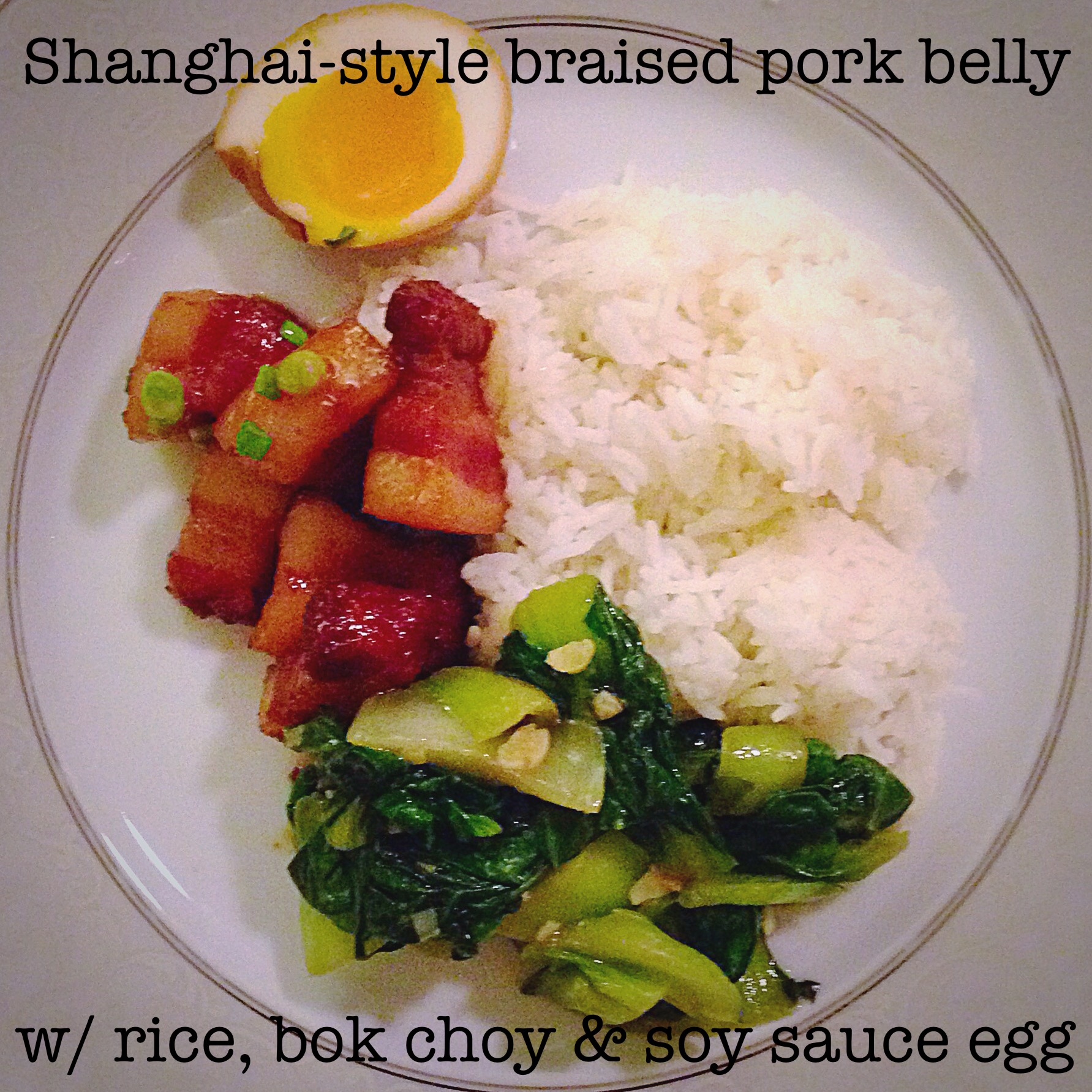
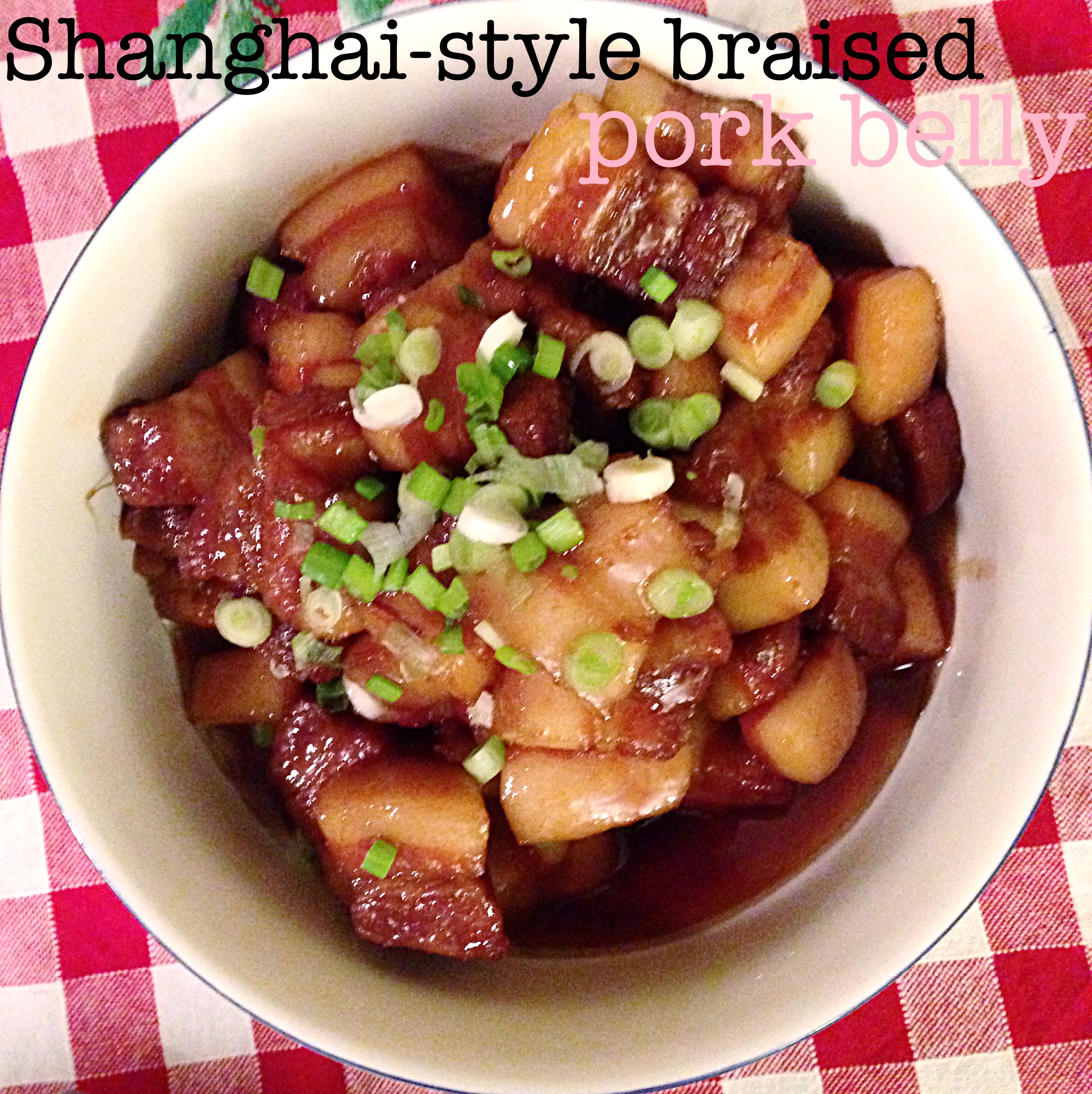
For a super tasty pork belly dish, check out the recipe below.
IMG_0300

Shanghai-Style Braised Pork Belly
Adapted from The Woks of Life
Servings: 6-8
Prep Time: 15 minutes
Cooking Time: 75 minutes

Ingredients

1 ½ lbs of pork belly, cut into ¾ inch pieces
3 tablespoons of canola oil
3 tablespoons of sugar
6 tablespoons of shaoxing wine (I used dry sherry)
4 tablespoons of soy sauce (original recipe calls for both light and dark soy sauce but I didn’t have any dark soy sauce on hand. It tastes yummy this way, but the sauce is lighter in color and less ‘authentic’)
4 cups of water

Directions

  1. Bring a large pot of water to a boil, and blanche the pork after boiling for a couple of minutes (this will get rid of some impurities and start the cooking process). Drain the pork and set aside.
  2. Put your wok over a low heat, add oil and sugar and stir for 1 minute. Add the pork, and raise the heat to medium. Cook until the pork is lightly browned, around 4 minutes.
  3. Turn the heat back down to low and add the cooking wine, soy sauce, and water. Cover and simmer for about 1 hour until the pork can be easily pierced by a fork.
  4. Once the pork is tender, there will still be a lot of extra liquid. Uncover the wok, turn up the heat, and let the liquid reduce for about 15 minutes, stirring frequently. The pork will reduce to a shiny, thick, brown sauce.
  5. Serve over rice, and EAT EVERYTHING.

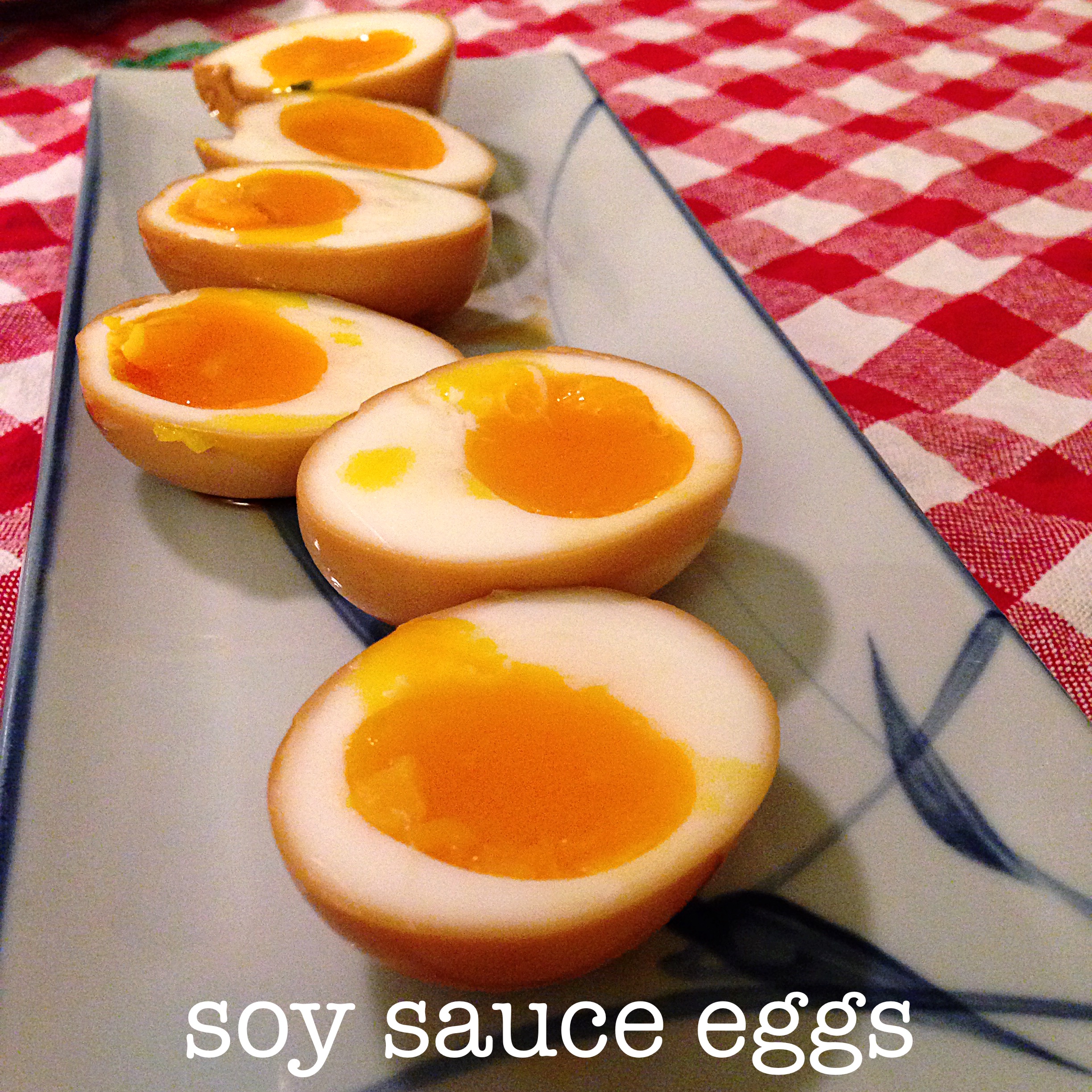
I served this with rice, sauteed bok-choy with garlic sauce, and soy sauce eggs.
IMG_0293

IMG_0315

Note: I recognize that I may be using the concept and feeling of “fatness” in a pejorative way, at least when it comes to analyzing myself. My intention is not to be fat-shaming, but to show the ways in which my general feeling of self-worth determines the way I feel about my body (in a society that is, in fact, fat-shaming). 

The Problematization of “Authenticity” Series: On Italy, Traditions, and a Recipe for Pasta e Fagioli (aka Pasta Fazool)

Longest title of all time.

I harbor deeply ambivalent feelings on the utility of “authenticity” as both a concept and a measure of something’s realness. Because there is so much to unpack, and because I don’t want to subject my readers to longass entries, I decided to start a series within the blog on this particular subject. Today, I will use my status as the wife of an Italian to talk about Italy and tradition. I offer no solutions or answers about authenticity in this entry, only the questions that bounce me back and forth between the benefits and detriments of the term. And, cuisine provides us with an interesting, safe, and delicious entry point into this conversation (isn’t it more comfortable to talk about an authentic recipe, as opposed to what it means to be authentically southern, black, Asian, etc?).

Here’s one of the things I hate most about authenticity re food: it necessitates an essentialized understanding of something that is, at its core, socially constructed…the nation-state. And, even if you break the nation-state down into smaller counterparts for the sake of precision, how do we identify the originary thing?

I was once gently admonished by a bona fide Italian that my Pasta e Fagioli was inauthentic, because it wasn’t cooked with lard and bits of pancetta. Boy, did I have feelings about that (top among them, an intense longing for lard and pancetta). Many of the Italians I know (and I do have a fair sample size, since my husband is an immigrant from what I call The Country of Cheese) identify with their province or region of birth, not with the country, which is pretty green in its current form as a republic. So, asking them whether something is authentically “Italian” is a bit senseless. You can, however, ask them about the foods of their region, and they will have very strong opinions about: (1) what ingredients should be included in a dish; (2) what ingredients should and should not be combined; (3) which region in Italy makes the best of [anything]; (4) blahblahblah. Tradition is everything.

(A word of advice: Never tell an Italian to put chicken in a pasta dish. They will make a disgusted and baffled face, and endlessly make flailing hand gestures)

Here’s a hilarious example of what happens when someone tries to de-Italianize a recipe:

https://www.youtube.com/watch?v=1X_IAaNPWKU&noredirect=1

But, even within each of these towns that are filled with their own histories and traditions, everyone’s mama makes food a bit differently, and isn’t that a beautiful thing? But, where does that leave poor little authenticity? I love Italy for its endless supply of cheese, wine, salumi, pasta, risotto, etc – whenever I’m there visiting Nico’s family, I end up eating my weight in amazing food. I think so much of the country’s great culinary accomplishments have to do with tradition. As the saying goes, if it ain’t broke, don’t fix it. When the food is so goddamn good, and comes from hundreds of years of practice and perfection, why change anything?

But Italy isn’t really a country of innovation, and it’s also not a country that is doing all that well in welcoming immigrants with different experiences and palates (sorry, Country of Cheese…I do love you). My point is this: not only is it kind of a silly pursuit to identify an originary taste or dish or meal, it’s also an inherently exclusionary position, especially if you are heralding all things authentic (when authenticity has to do with Italian ‘pedigree’) and poopoo-ing all things divergent. I think there is a way to honor tradition while simultaneously absorbing new people, contexts, histories, and tastes. Look at Spain! Look at France! Italy…if anything will jump start a process of culinary innovation and inclusion, it’s the knowledge that you are falling behind…France.

I have what may be a totally “inauthentic” recipe for Pasta e Fagioli (lovingly known as “pasta fazool” in this country), but it’s pretty yummy. It’s informed by Nico’s taste-based memory of his mom’s soup, and a little by my mild disdain for dishes that have zillions of ingredients.

As you know, I made a bunch of stock last week, which left me with enough for this delicious soup. I’m a little baffled by how many recipes on the internet are trying to recreate The Olive Garden’s version…yikes…?

Anywho,  I sometimes include pancetta in this dish (which I’ve included in the recipe), but since I made three pounds of incredibly fatty pork belly, this week, I thought I would keep this soup a bit lighter. I also did something weird and topped the pasta fazool with sauteed swiss chard. The dish is naturally sweet from the vegetables, and I like to balance that with a bit of bitter, salty, and spicy flavors.

If you’re looking for a comforting, thick, creamy (but not heavy) soup, try this out! Here it is:

IMG_0329

Yejin’s Pasta e Fagioli

Servings: 6
Prep Time: 15 minutes
Cooking Time: 30 minutes

Ingredients

2 tablespoons of olive oil
4-6 ounces of pancetta, diced (optional)
1 white onion, chopped
3 large carrots, roughly chopped
2 ribs of celery, roughly chopped
2 cloves of garlic, roughly chopped
4 cups of chicken stock (homemade or purchased)
2 tsp of kosher salt
2 cans of cranberry/roman beans, drained
egg noodles
¼ cup of freshly grated grana
Sauteed Swiss Chard w/ Garlic, Anchovies, and Crushed Red Peppers (RECIPE BELOW)
Drizzle of quality olive oil to top

Directions

  1. In a large and heavy-bottomed pot, heat the olive oil over medium heat. If you’re using pancetta, add to the pot and cook until the fat begins to render, about 5 minutes. I like to take the pancetta out of the pot and place onto a paper towel lined plate. After ladeling the soup into a bowl, I like to sprinkle the pancetta on top. You can also keep the pancetta in the soup…up to you! Add the onion, carrot, celery, and garlic and cook for 5 minutes, stirring frequently.
  2. Add the chicken stock and bring to a boil. Reduce the heat to a medium low and simmer, uncovered, until the vegetables are tender (can be easily pierced with a fork), about 20 minutes. Add cranberry/roman beans and cook for another 5 minutes.
  3. Pour the broth/vegetable mixture into a large mixing bowl. Do your thing with an immersion blender or a regular blender (I don’t use the immersion blender in my nice pot). I like to puree the whole thing so that the soup is creamy perfection, but some people like to puree half and keep the other half as is. Add more broth or water if you want to thin the soup out.
  4. Return your soup into pot and taste for salt. Cook over low heat, stirring occasionally.
  5. In the meantime, bring water to a boil in a separate pot. Cook egg noodles according to package instructions. Drain and use a slotted spoon to place noodles in your serving bowls.
  6. Ladel soup over the noodles in your serving bowls.
    (Cooking the noodles directly in the soup will mean that your leftovers will be filled with overcooked pasta…no good!)
  7. Sprinkle with desired amount of shredded grana (and pancetta), top with sauteed swiss chard, and drizzle quality olive oil.
  8. ENJOY

Sauteed Swiss Chard with Garlic, Anchovies, and Crushed Red Pepper

Servings: 2
Prep Time: 10 minutes
Cooking Time: 10 minutes

Ingredients

1 bunch of rainbow swiss chard, tough stalks discarded and leaves cut into ribbons
1 clove of garlic, minced
1 tablespoon of olive oil
2 anchovies, finely chopped
¼ tsp of crushed red pepper
Salt

Directions

  1. Place swiss chard leaves in a bowl with cold water. Rinse out the leaves thoroughly to remove sediment.
  2. Bring a pot of water to a boil and add swiss chard leaves. Cook the leaves for 5 minutes in boiling water, drain, and place under cold running water. When the chard is cool enough to the touch, squeeze the water out.
  3. Heat a saucepan on a medium heat setting. Add the olive oil, minced garlic, anchovy, and crushed red pepper and saute for about 2 minutes. Add the swiss chard leaves, bring heat to medium-low, and continue cooking for 5 minutes.

Coming up: On Being Healthy + A Recipe for Pork Belly

On Being a “Bad” Korean, Identity Politics, and a Dak Bulgogi Recipe

Excepting my immediate family, I didn’t grow up around many Koreans, so my understanding of what it means to be and look like a good one is based on one main thing: reiterations of a stereotype from a variety of sources. Adjectives I would use to describe the ‘ultimate’ Korean woman are: deferential, passive, overachieving, obsequious, and hardworking.

In many ways, I was good at fulfilling expectations/stereotypes at the start of my life. I played piano competitively (you have my permission to cry and/or laugh), became jealous of my older brother when he was “lucky enough” to go to Kumon (which resulted in my fabrication of math homework at home, which made no sense because I didn’t understand the meaning behind numbers), performed well in school, and desired achievement in all my bougie activities (including flute, choir, solo classical singing, and ballet). Parental expectations were high, but even at a very young age, my expectations of myself were even higher and more unattainable. And, to top it off, I was absurdly obsequious. Though I wasn’t gifted in math or science (I think I peaked in middle school), so far I sound like a pretty good Korean, right? Right.

Little Yejin as a good Korean

Little Yejin as a good Korean

Good Korean Yejin, in a bougie ballet

Good Korean Yejin in a bougie ballet

Enter college. I blame (read: appreciate) college for unveiling a whole mess of complexity around my identity as a Korean and person of color. During my first semester as a freshman, I took an upper level history class on black modernity, which was taught through the lens of Ralph Ellison’s Invisible Man. Dope. I really had no business being there, because I wasn’t learned or capable enough (at the time) to fully understand a lot of the material, but I’m so glad I took that course because it sparked a piece of me that remains at my core: an investment in antiracism work and identity politics. This newly discovered passion coupled with my not-great experience with some Koreans and Korean-Americans on campus (who didn’t want to initially befriend me because I didn’t share their interests or religion, and, my personal favorite, because I didn’t look super Korean), moved me to bypass that part of my identity and start thinking of myself solely as a person of color. Goodbye, KPOP! Goodbye, Morning Glory! Goodbye, obeisant Yejin!

yejin6

College/Bad Korean Yejin with too many mismatched piercings, necklaces, and opinions.

But, as I started understanding my own privileges (of which there are many), I engaged in a lot of difficult conversations with mostly black and brown students about whether East Asians should be included in the ‘person of color’ identifier, at all. We had interesting, sad, and passionate discussions about whether a hierarchy of oppression exists, and how the answer should impact our daily interactions and our work. My first instinct was to be an ally to those who experience a different type of systemic, cultural and interpersonal racism, and to fully agree that there was no reason to be grouped all together. I rejected the importance and relevance of my background and focused solely on how Asians could and should be allies to our black and brown brothers & sisters.

Around the same time, I took an amazing and challenging US immigration history course, where I learned more about the Chinese Exclusion Act, the extremely racialized nature of immigration policy, and the intricate relationship between immigration, labor, and whiteness. I focused a lot of my time researching the third and fourth waves of immigration, and came to a new conclusion: that shit was complicated. I began to push back against the argument that Asians don’t experience racial discrimination (beyond the “ching chong” comments), not because I wanted to acquire some counter cultural capital, but because I began to see how power operated on a systemic and policy level to undermine non-white people, and, importantly, because I began to see the limitations of identity politics.

I am a middle-class Korean-American whose father is a dentist. I experience great privilege regarding class, education and gender identity, among other things. I am not poor. I have never been profiled or stopped-and-frisked by the police, nor do I fear for my safety, life, and constitutional rights when I see a cop. I am also not all Korean Americans or East Asians. I am not a working migrant laborer without documentation who speaks minimal English. I am not a child of working-class immigrants in Flushing who serves as the sole translator between their parents and [name any institution]. And I realized: to exclude any Korean or Asian history or experiences from anti-racism organizing would be a mistake.

The ‘person of color’ identity suddenly was not enough by itself. Without constantly locating my different and moving privileges (and experiences of discrimination), I couldn’t be a proper aspiring ally to my comrades. And without identifying as a person of color, I didn’t feel like I could incorporate the complexity of racial history and practices of oppression in my work and life. This meant that I was ready to invite my Korean-American identity back into my world. Hello, old friend!

For whatever reason, people have a really hard time accepting that they have specific types of power and privilege. I’ve never had that problem, and I’m grateful for that. Ultimately, I still think I’m a pretty “bad” Korean when it comes to the stereotype. I can be a bit abrasive. I still suck at math. I’m definitely not passive. I am an intense over-sharer (as you can tell). But, what on earth should it mean to be a good one? I hate when people say things like “a real/good American would…blahblahblahiamsoboring” in order to justify an exclusionary and simplistic tenet (e.g. ‘real Americans don’t take handouts from the government’). In response, I try to broaden the frame. Good Americans care deeply for those in poverty. Good Koreans care deeply for their black and brown brothers and sisters. So, maybe, just maybe, I’m not so bad.

“Our challenge, as we enter the new millennium, is to deepen the commonalities and the bonds between these tens of millions, while at the same time continuing to address the issues within our local communities by two-sided struggles that not only say ‘No’ to the existing power structure but also empower our constituencies to embrace the power within each of us to crease the world anew.”
– Grace Lee Boggs, The Next American Revolution: Sustainable Activism for the Twenty-First Century

And now, for a recipe. Korean food. Ugh, how I love Korean food. But, I’m lazy. Well, I guess that’s probably not super true. But I’m lazy when it comes to making Korean food because I don’t feel like going to H-Mart for ingredients, and Korean food requires a lot of preparation that I don’t really have time for on weekdays. But, this recipe is pretty quick, easy, tasty, and makes the apartment smell SO GOOD (and vaguely Asian) for hours.

IMG_0223

Ddak Bulgogi (Korean BBQ Chicken)

(adapted from Korean Bapsang’s recipe)
4 servings
Prep time: 15 minutes
Cooking time: 15 minutes

Ingredients:

1 ½ pound boneless chicken thigh (I don’t like cooking with chicken breast, but you can use whatever you want!)

Marinade:

3 tablespoons soy sauce
1 tablespoon lemon juice
2 tablespoons honey
1 tablespoon rice wine (or mirin)
1 tablespoon minced garlic
1 teaspoon grated ginger
1 tablespoon sesame oil
pinch black pepper
1 teaspoon sesame seeds (This is optional. I never do it because I always forget to get sesame seeds and it turns out fine. But I’m sure it’s tasty to include!)

Directions

  1. Rinse chicken pieces and dry them with a paper towel. Using a sharp knife, cut each of the chicken pieces into your desired size. I like to cut them so they’re around two inches wide and two inches long. Make sure each piece is around the same thickness.
  2. In a large bowl, mix the marinade ingredients in a bowl until the honey is fully incorporated. Optional: Take a whiff of that incredible smell,
  3. Put chicken in the bowl and mix until each piece is coated in the marinade. Cover with plastic wrap and refrigerate for at least 30 minutes.
  4. Take the chicken out of the fridge and give it a good mix. Cover with plastic wrap and let it sit for 15 minutes.
  5. Preheat a skillet over medium high heat. Add a drizzle of canola oil and add chicken pieces, reserving the marinade. Do not overcrowd the pan. I usually do this in two batches. Cook for about two minutes on each side until the chicken is cooked through and slightly caramelized, about 2 minutes each side. If you think the pieces are starting to burn, you can take some of the marinade and spoon it over the chicken. You can also ever-so-slightly reduce the heat.

Serve this with white rice and some sauteed veggies, and you got yourself a kind-of-Korean dish. I also like to have something tangy with this chicken to balance the umami of the marinade. Kimchi, pickles, salad, whatever!

IMG_0224

(I ate this with jasmine rice, roasted asparagus, and fried tofu + spicy ginger garlic sesame sauce)

Mnemonic Meals and Paprika Chicken Stew Recipe

Disclaimer: Possible trigger warning around death of a loved one. This entry is pretty personal, and maybe a wee bit sad. Feel free to run for the hills!

My memory is crap. Occasionally, a close friend will fondly bring up something from the past and sweetly ask, “Do you remember?” I’d try to sound nostalgic/excited whilst exclaiming “I would never forget!” but folks could tell by the vacant or worried look in my eyes that I did not, in fact, recall a damn thing. Someone could fabricate a narrative involving the most absurd characters and elements, insert me into it, and have me believe that the anecdote was truth. Suckaaaa! After an in-depth internal investigation, I’m loathe to announce that there is no substantive or reliable historical archive in this noggin of mine.

Though I can’t recall actual facts or occurrences with any semblance of accuracy, I do remember how I felt about certain people and moments, and I do that with great aptitude (read: I have lots of feelings). And nothing jogs these implicit emotional memories quite like food and their associated smells, which is probably why my adoration for cooking and eating is so severe.

My mother cooked a lot of Korean and non-Korean food when I was growing up. And for some reason, the dish I most associate with her is Paprika Chicken Stew over Jasmine Rice. When I was somewhere between the ages of 11 and 17 (you see how terrible this brain is?), she told me that she needed a great ‘sous-chef’ in order to cook this dish and I volunteered with intense enthusiasm. I had never cooked before, and it sure seemed like it would be fun to touch a dead bird, throw flour around the kitchen, and chop vegetables like a ninja. Mom was always kind and encouraging; she kept calling me the ‘sous-chef’, even though I was chronically using sugar in place of salt. In any case, this has long been my go-to dish when I seek comfort and love in my belly and soul, even though she is no longer here to cook it for me.

mother, holding baby yejin

mother, holding baby yejin

Meet mom. Look at this magnificent human being! She was, for a long time, my everything: my muse; my source of encouragement, self-love and strength; my friend. Nine years ago, she left this world for another, one she suspected was filled with infinite amounts of clay for a happy eternity of pottery-making. She was suddenly gone, and my memory did nothing to keep her close. It didn’t matter how tightly I squeezed my eyes shut – shortly after losing her to breast cancer, I couldn’t hold onto something as tangible as the sound and timbre of her voice. It didn’t matter whether I journaled or shared detailed stories with friends, because my reality had always been (and continues to be) inextricably linked to actively living and growing with something or someone. And without her by my side, my brain can not reconcile the cognitive dissonance associated with remembering someone who no longer exists, someone who is no longer real. Components of memories that are palpable for most people, like images, sounds, words, sequences of events, those were the pieces of her that dissipated, first.

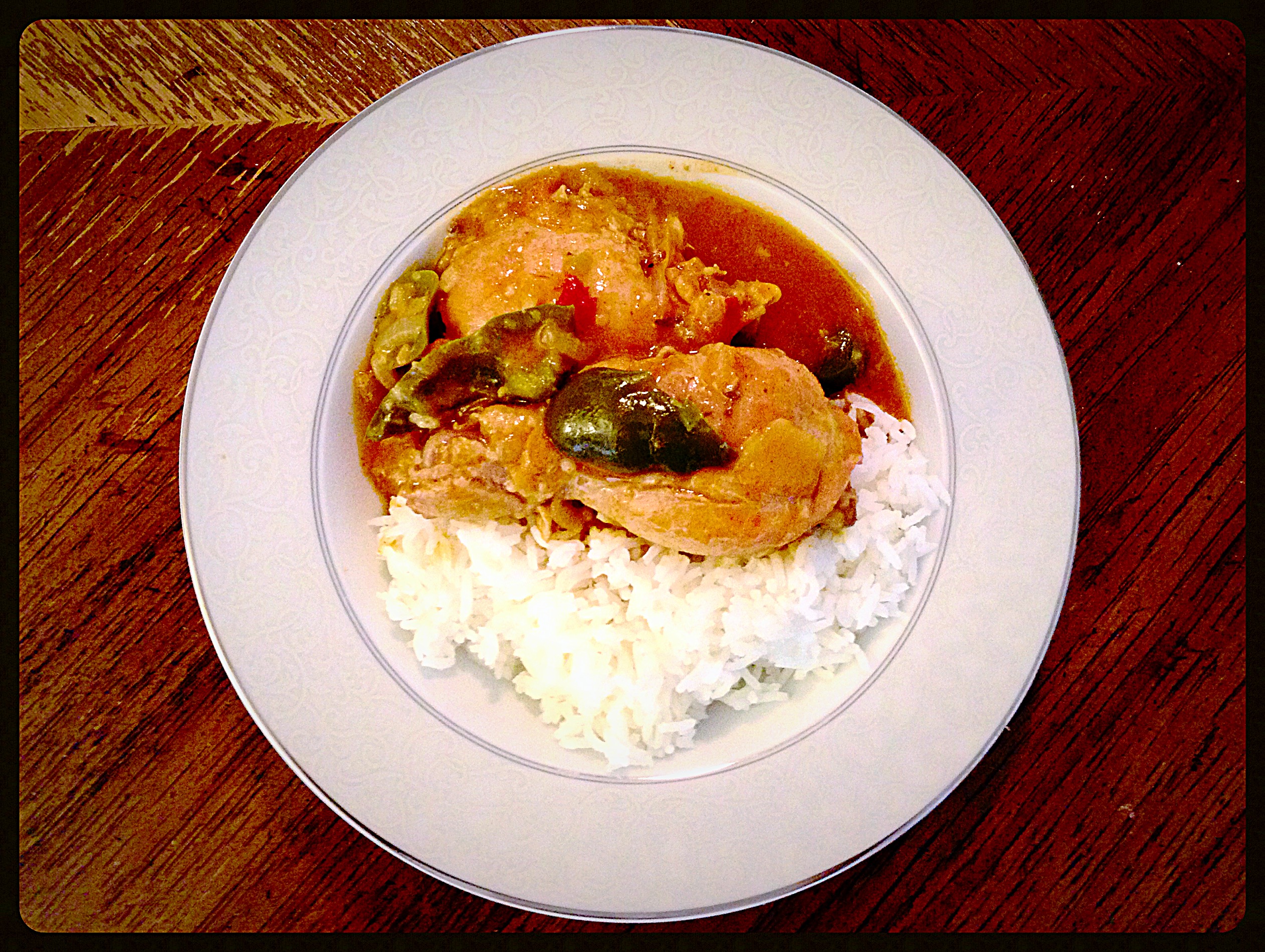
So, I no longer drive myself crazy when I want to feel my mother’s presence. Instead of trying to bully myself into recounting images, sounds, words, and sequences of events, I cook or eat something that smells and tastes like a moment or a feeling. For a happy moment, I make Paprika Chicken. Not because I (probably inaccurately) remember the time she taught me to cook the dish, but because upon taking one bite, I can close my eyes and feel what it was like to be loved by her. The tenderness of the chicken in this recipe, the creaminess of the stew, the way in which the rice soaks up the fatty goodness, the fragrance of sauteed onion, garlic, and hot paprika, all of these elements help me to re-feel and re-experience how much I loved her and how much she loved me.

It’s taken me a few years to embrace my fallible and feelings-based memory, and to accept the fact that I will probably always have a contentious relationship with my brain when it comes to remembering the words, images, and sounds of those who molded my heart and soul. But I have learned to take solace in the mnemonic possibilities of food. For me, smells and tastes can magically conjure feelings of love, righteous indignation, anger, happiness, or camaraderie, and help me to acknowledge important people and moments in my life.

I really love making and eating stews – they are hearty and comforting, like a tight hug from a loving and flannel-clad lumberjack. Though some stews require a good amount of preparation, I find them to be easy to manage since they’re largely cooked in one pot. For obvious reasons, this one is a favorite of mine. Without further ado, here’s the recipe:

Paprika Chicken Stew

IMG_0118

4-6 servings
Prep time: 15 minutes
Cooking time: 60 minutes

Ingredients:

Kosher salt and freshly ground black pepper, for seasoning chicken
3 to 3 ½ lbs of bone-in chicken drumsticks and thighs
2 medium white onions, diced
3 garlic cloves, roughly chopped
2 green bell peppers, julienned
3 tablespoons of flour, to lightly dust the chicken
2 tablespoons of kosher salt
2 tablespoons of smoked paprika
½ teaspoon of cayenne pepper
1 teaspoon of freshly ground black pepper
1 ½ cups of water (or chicken stock for a heavier stew), plus more if needed
1 can of diced tomatoes, liquid drained
1 tablespoon of olive oil
2 tablespoons of butter

For thickening agent:
3 tablespoons of flour
¼ cup of water
½ cup of sour cream

2 cups of jasmine rice (also delicious served with egg noodles)

Directions

  1. Pat chicken dry with a paper towel to remove excess moisture. This will help to ensure that you brown your chicken with perfection!
  2. Liberally season the chicken with salt and pepper. Once seasoned, toss chicken in a large bowl and toss with three tablespoons of flour. Make sure each part of the drumsticks and thighs are lightly coated.
    Dusting meat with flour before searing/browning is optional, but I use this technique whenever I eventually want a thicker sauce. Here’s a great article from The Reluctant Gourmet called Why Flour Meat Before Browning
  3. In a large dutch oven or a pot with a heavy bottom, heat olive oil on high heat for one minute. Shake off any excess flour, and place pieces of chicken in the pot, skin side down. Do not overcrowd. Leave the chicken for 5 minutes, until golden brown and crispy. Flip the meat and cook for another 5 minutes. Transfer to a plate, and continue with remaining drumsticks and thighs.
    One thing that I’ve learned is not to tinker too much with the meat while it’s browning. The purpose of browning meat is two-fold: (1) to render excess fat; and (2) to beautifully caramelize the outside of your meat to maximize flavor. If you smell something starting to burn, turn the heat down to medium-high and adjust the piece of meat. Here’s a great article from The Kitchn on How to Sear Meat Properly.
  4. Discard all but 1 tablespoon of the fat rendered from the chicken and reduce heat to medium. Throw in 2 tablespoons of butter, add chopped onions and stir frequently for 2-3 minutes.The moisture from the cooking onions will grab some of those delicious brown bits stuck to the bottom of the pot.
  5. Add chopped garlic and cook/stir for another minute.
  6. Add paprika, cayenne pepper, salt, and freshly ground black pepper, and cook for another minute until the spices are very fragrant. Make sure to stir – burning the spices can lead to a bitter taste.
  7. Add can of diced tomatoes, water and gently stir. Return chicken drumsticks and thighs to pot. If there isn’t enough liquid to cover the chicken, add a little more. Once the stew comes to a gentle boil, lower the heat and cover the pot. Let it simmer for 45 minutes.
  8. While the stew is simmering, mix sour cream, flour, and water. Set aside for later use.
  9. Take the lid off the stew and add green bell peppers and the sour cream and flour mixture. Stir the pot. Cover and let it simmer for another 30 minutes. Taste and add salt based on your preferences.
  10. Meanwhile, cook jasmine rice as per package instructions.
  11. Put cooked rice into a bowl, place desired number of chicken pieces on top of rice, and ladle sauce over. Enjoy!